
TOUCHED BY LYME: More comment about school disallowing Lyme teen's photo in yearbook

|
May 23, 2010

Highly light-sensitive Lyme patient Sami Siegel spent her high school years in darkness, with only the glow of a cellphone, since anything brighter triggers seizures. (Read more of her story here.) Though she’s completed graduation requirements, now her Pennsylvania school district won’t allow her photo in the yearbook. Their reasons sound bureaucratically tone-deaf at best, and discriminatory at worst. Lyme-literate family therapist Sandy Berenbaum offers the following comments on the situation.
As I see it, having one’s picture in the yearbook is a part of the school experience. In school meetings I attend with parents, the educators express concern about the social and emotional well-being of the student, particularly those who are on homebound instruction for a long period of time. Families develop creative strategies to help their children grow socially, but it is certainly a difficult hurdle.
With a child’s picture in the yearbook, their peers see that they are still around, despite their illness. It might encourage old friends to contact and resume a friendship with the student, and thereby promote their social well-being. It also cuts through some of the loneliness the student is experiencing, and helps them recognize that, despite their limited functioning, they are, indeed, a part of their graduating class, after the hard work they have put into reaching this milestone.
It therefore seems appropriate to me that the 504 plan or IEP include accommodations for their yearbook picture, taken by means that they can tolerate. It could come under the social and emotional goals reflected in the plan. The student’s inability to have their picture taken the traditional way is, after all, a problem generated by their disability, and the accommodation arises from that disability.
I realize that there are bodies of education law that govern what goes into 504 plans and IEPs, so if the school objects to this type of accommodation, parents may wish to pursue legal advice. However, if the school and the parents do come to an agreement, it may be a way around the school’s dilemma about their contract with the photographer.
Learn more about Sandy Berenbaum at her website www.lymefamilies.com.
Written by
Do You Have Lyme Disease?
Use our symptom checklist to better understand possible Lyme disease signs and next steps.
Newsletter Sign-up
Helpful Resources
Support LymeDisease.org
Your support helps us advocate for patients and fund critical Lyme disease research.
Related Articles
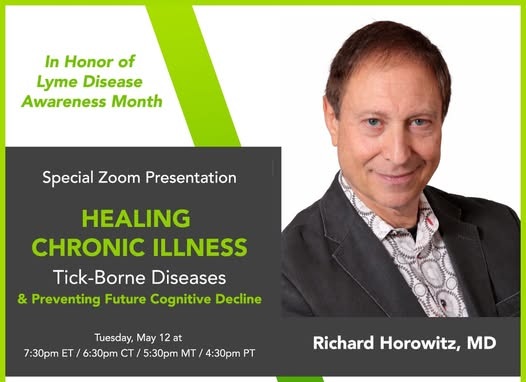
Watch Dr. Horowitz’s “save your brain” webinar here
Experts estimate that 42% of people over age 55 will develop some form of dementia during their lifetime. Dr. Richard Horowitz has an important message…

Is there a link between Lyme disease and alpha‑gal syndrome?
By Meg Muckenhoupt A new study by Cleveland Clinic researchers shows a strong link between Lyme disease and alpha-gal sensitization. In this context, sensitization means…

When chronic Lyme shapes a life and the music that comes from it
Artistry with Heart is a podcast devoted to the inner life of artists — the doubts, the breakthroughs, the healing, and the deeply human stories…

PODCAST: Chronic pain doesn’t have to win. Try this instead.
By Fred Diamond Wendi Lindenmuth says that healing from Lyme disease begins not with fighting the body but with resolving to listen to it. That’s…

One Lyme drug didn’t pan out, but a better option is on the horizon
Back in 2021, the Lyme community was buzzing about a potential new treatment called hygromycin A. It came out of Dr. Kim Lewis’s lab at…
Did your child’s behavior change overnight? LymeTV tackles PANS/PANDAS
By Team LymeTV Imagine your child goes to sleep one night and wakes up a different person. The vibrant, curious child you knew is suddenly…