
Lyme Basics
Chronic Lyme
If Lyme disease is not diagnosed and treated early, the bacteria can spread and may go into hiding in different parts of the body. Weeks, months or even years later, patients may develop problems with the brain and nervous system, muscles and joints, heart and circulation, digestion, reproductive system, and skin.
Untreated or undertreated Lyme disease can lead to persistent, debilitating symptoms. This condition is often referred to as post-treatment Lyme disease syndrome (PTLDS) or chronic Lyme disease (CLD).
While the exact number of patients who remain ill after treatment is unknown, CDC estimates range from 10–20%, and one study found that 36% of patients treated during the early rash stage remained symptomatic (Aucott, 2013). The International Lyme and Associated Diseases Society (ILADS) reviewed treatment outcomes and found failure rates of 16–39% for early treatment. For chronic Lyme patients, estimates range from 26–50%.
LymeDisease.org has developed a Lyme disease symptom checklist to help patients document exposure and symptoms. You will receive a report that you can print out and share with your healthcare provider.
Chronic Lyme Disease Patients Profoundly Disabled
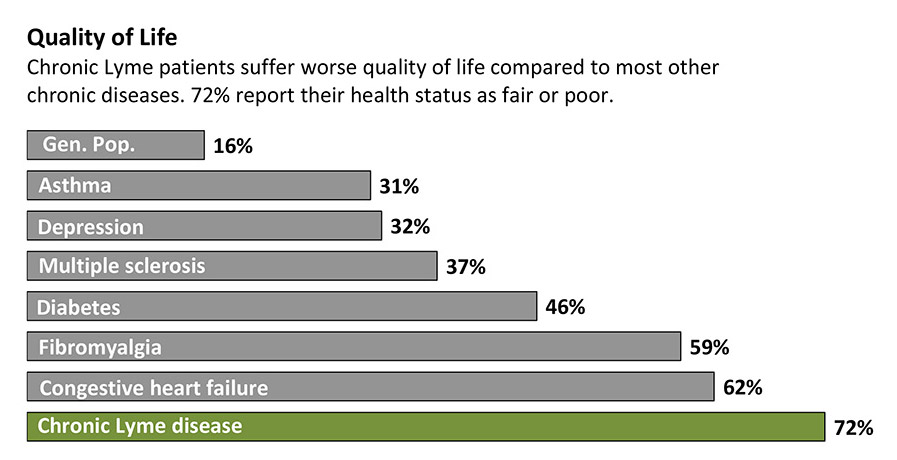
Chronic Lyme disease can be profoundly disabling. NIH-sponsored retreatment trials revealed that patients’ quality of life was comparable to those with congestive heart failure. Pain levels matched those of post-surgical patients, and fatigue was similar to that seen in multiple sclerosis.
A survey by LymeDisease.org of over 3,000 chronic Lyme patients found that more than 70% reported fair or poor health, with quality-of-life scores lower than those for diabetes, arthritis, and other chronic conditions.
While Lyme-related deaths are rarely acknowledged, the CDC has issued warnings about sudden cardiac deaths linked to Lyme carditis. Suicides have also been associated with chronic Lyme — though these are often underreported.
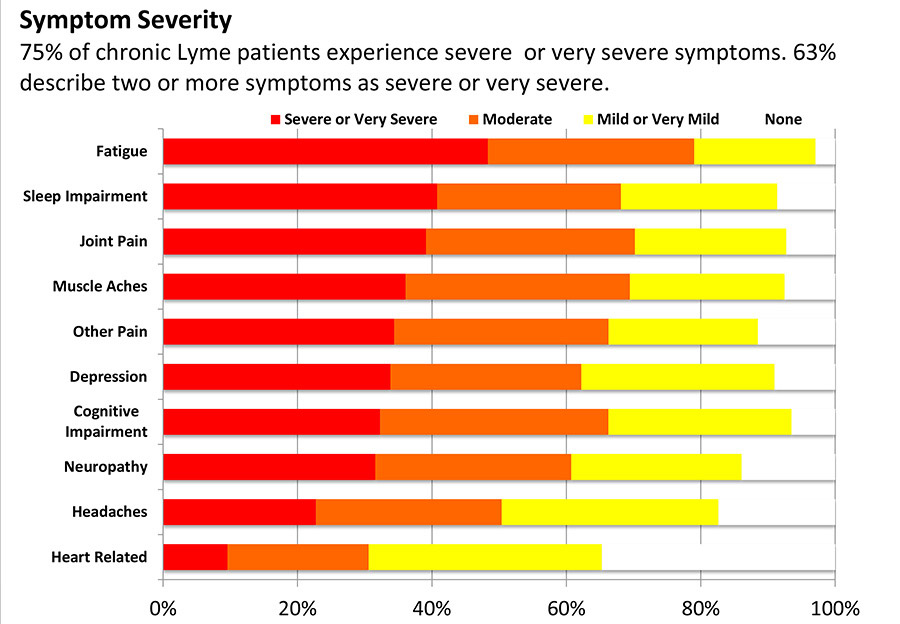
Many of the symptoms associated with Lyme disease are common in other diseases. The CDC surveillance criteria for confirmed cases specifically exclude most of the symptoms that patients report, including fatigue, sleep impairment, joint pain, muscle aches, other pain, depression, cognitive impairment, neuropathy, and headaches. However, these common symptoms can be severe and may seriously affect quality of life.
Misdiagnosis Complicates Treatment
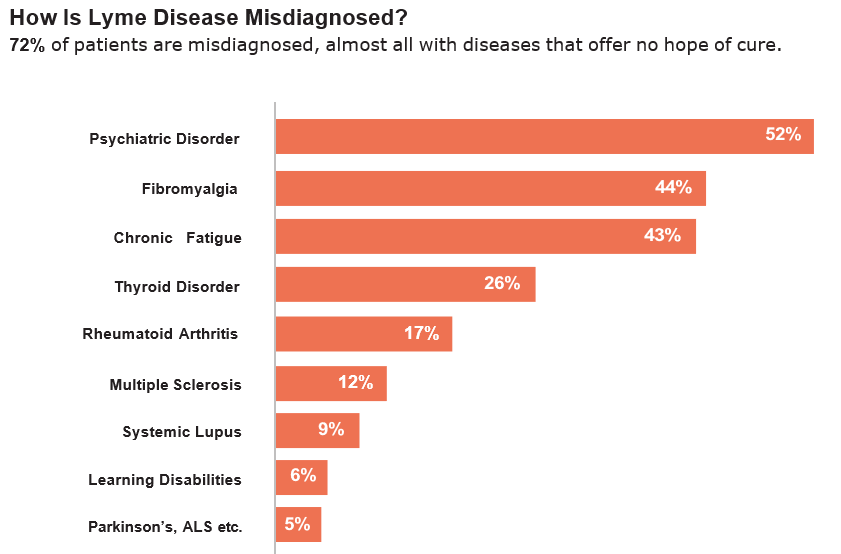
Lyme disease mimics many other conditions. Patients who do not have a positive Lyme test are often misdiagnosed with other illnesses, such as multiple sclerosis, lupus, ME/CFS, ALS, or depression. Misdiagnosis leads to delayed treatment and worsening symptoms.
Chronic Lyme Disease Symptom Severity
In LymeDisease.org’s chronic Lyme disease survey, over 75% of patients reported at least one symptom as severe or very severe and 63% reported two or more such symptoms.
(Johnson 2014) Find out more about LymeDisease.org’s peer-reviewed published surveys. The chart below shows the severity of ten common chronic Lyme symptoms.
The survey also found that patients with chronic Lyme disease have high disability and unemployment rates. Over 40% of patients with chronic Lyme disease reported that they currently are unable to work because of Lyme disease and 24% report that they have received disability benefits at some point in their illness.
Note: The information presented on this page has been reviewed and approved by a member of our Medical Leadership Board.