
How to Prevent Ticks In Your Yard
Simple Steps for a Safer Outdoors
Keeping ticks out of your yard is crucial for protecting your family and pets from tick-borne diseases.

Maintain a Healthy, Tick-Free Yard
Most people don’t realize it, but the majority of tick bites actually occur right in their own backyard. Ticks thrive in shaded, moist areas such as tall grass, leaf piles, and garden edges, making residential yards a perfect environment. Taking steps to prevent ticks from settling in your yard helps reduce the risk of contracting a tick-borne disease.
Ticks are typically carried into yards by various wildlife such as deer, raccoons, birds, rodents and even pets who spend time outdoors. Once in your yard, ticks can easily attach to humans or pets that come into contact with areas where ticks hide. Fortunately, there are steps you can take to prevent ticks from finding a home in your yard.
Yard Tick-Prevention Tips
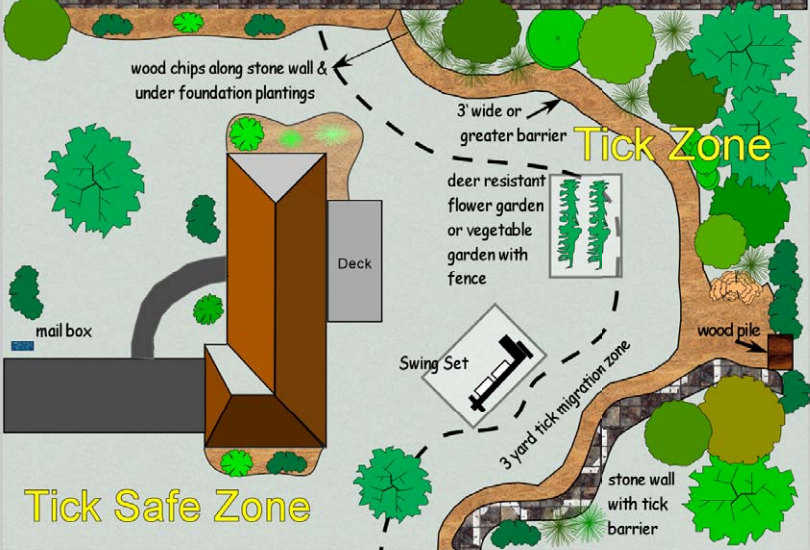
Source: The Tick Management Handbook ─ provides information on ticks, diseases and prevention. Click here to download.
Yard Maintenance for Ticks
How to Treat Your Yard for Ticks
In addition to landscaping, treating your yard can reduce the number of ticks and minimize the risk of bites. Using insecticides (EPA approved) or natural, pet-safe products in areas where ticks are most likely to hide can help control infestations.
For those seeking natural alternatives, options like cedar oil sprays or diatomaceous earth can help repel or kill ticks without harsh chemicals. Another approach involves the use of tick tubes. These tubes deliver permethrin-treated cotton to mice — reducing the number of ticks at the source.
If you choose to use pesticides to treat your yard, always seek professional advice. Carefully timed applications are more effective, and it’s essential to allow chemicals to fully dry before letting pets or children back into the treated area.
Control Wildlife to Reduce Ticks
Managing wildlife activity can help with preventing ticks from establishing a presence near your home. Wild animals like deer, rodents, birds, and lizards can carry ticks into your yard. To reduce tick populations, make your property less inviting to these hosts.
By regularly maintaining your yard, implementing wildlife control and using targeted tick treatments, you can significantly lower the risk of tick bites and the reduce the chances of contracting a tick-borne disease.
Ticks in residential yards pose a real threat.
In the Northeastern U.S., 69% of tick bites occur in residences with activities like yard work, gardening, and playing outside being common sources of exposure.1
One study found that blacklegged ticks were present in 32% of sampled yards.2
The likelihood of encountering a nymph was nearly three times higher in shaded vegetation than in open areas. 3
Note: The information presented on this page has been reviewed and approved by a member of our Medical Leadership Board.