VBD strategy developed by 17 federal departments and agencies
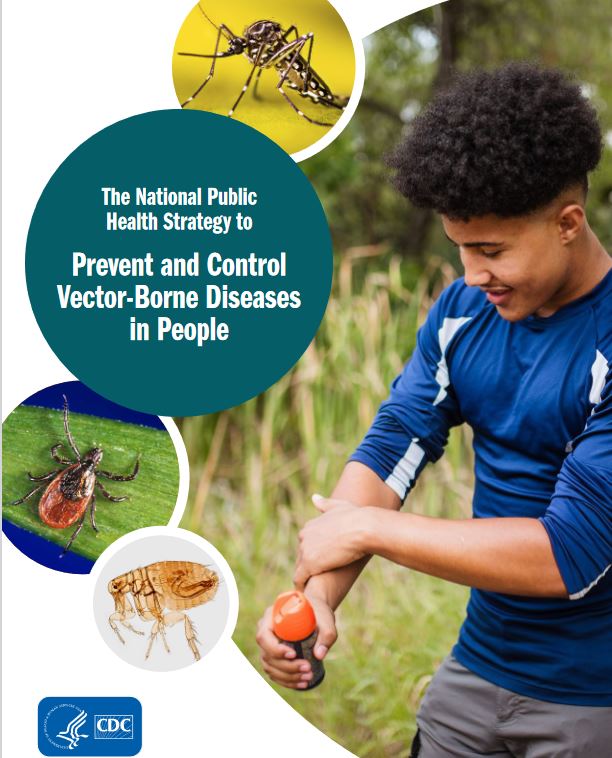
The US government has released the National Public Health Strategy to Prevent and Control Vector-Borne Diseases in People. It’s a joint effort by 17 federal departments and agencies.
The Kay Hagan Tick Act, signed into law in 2019, required the Department of Health and Human Services to develop a strategy to fight tick-borne diseases such as Lyme. (As well as other vector-borne illnesses, such as those spread by mosquitoes and fleas.
The newly released plan identifies federal priorities to detect, prevent, respond to, and control diseases and conditions caused by vectors in the United States.
It lays out five goals:
1. Better understand when, where, and how people are exposed to and get sick or die from VBDs.
2. Develop, evaluate, and improve tools, methods, and guidance to diagnose VBDs and their pathogens.
3. Develop, evaluate, and improve tools, methods, and guidance to prevent and control VBDs.
4. Develop and assess drugs and treatment strategies for VBDs.
5. Disseminate and implement public health tools, programs, and collaborations to prevent, detect, diagnose, and respond to VBD threats.
Here’s a report from News Center Maine, which includes interviews with Maine Senator Susan Collins (original sponsor of the Kay Hagan Tick Act) and a Lyme-treating physician.

lymediseasestaff
Do You Have Lyme Disease?
Use our symptom checklist to better understand possible Lyme disease signs and next steps.
Newsletter Sign-up
Helpful Resources
Support LymeDisease.org
Your support helps us advocate for patients and fund critical Lyme disease research.