LYMEPOLICYWONK: Growing Number Of Chronic Lyme Patients—Still No Government Action Plan?

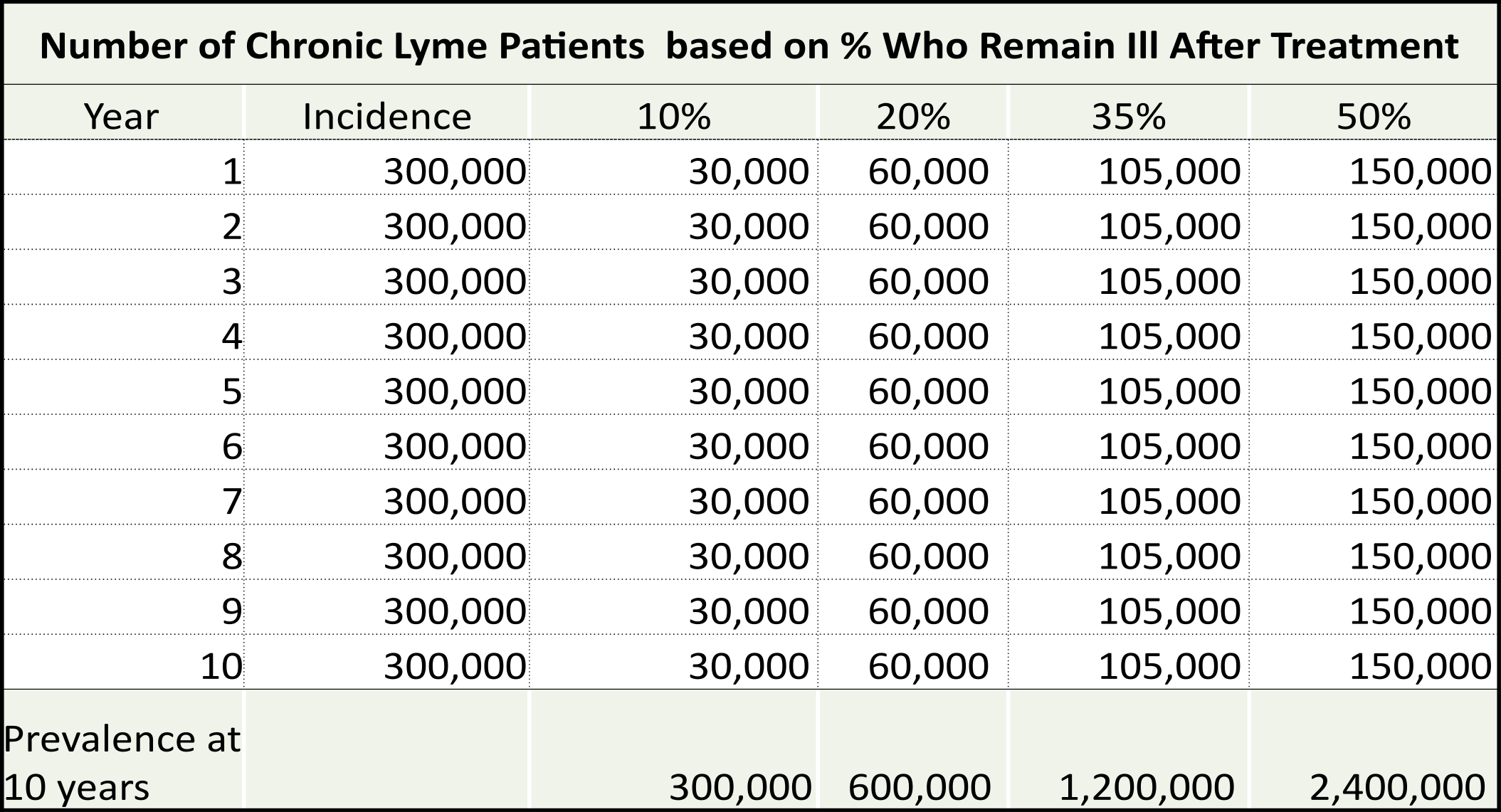
Have you ever wondered how many people have chronic Lyme disease? The NIH estimates between 10-20% of those who get Lyme develop persisting symptoms. Other studies suggest between 35%-50%, depending on whether the patients had early or late Lyme disease at the time of treatment. What gives?
When we talk about how many people have a disease, it is important to distinguish between incidence and prevalence. Incidence is the number of people who contract Lyme disease in any given year. The recent studies by the CDC suggest this number is 300,000 and possibly as high as 420,000 a year. Many of these people will be diagnosed early and treated successfully. Those who aren’t remain ill and add to a growing burden of disease as their numbers continue to mount.
The number of people who get a disease and remain ill is what is called the disease “prevalence”. Some percentage will be diagnosed early and treated but will continue to remain ill. In addition, people who are diagnosed later are more difficult to treat and more of these remain ill. Both groups increase the prevalence of Lyme disease.
A study by Dr. Aucott at Johns Hopkins looked at patients diagnosed and treated early. He found roughly 35% remained ill. Seven other studies have found that between 27% and 50% of patients remain ill. The CDC/NIH estimates that the percentage remaining ill is between 10-20%.
So estimates range from 10-50%. Why the big difference? The differences are likely the result of what measure of success is used. Some studies measure success based on whether objective findings, like a swollen knee or a rash is resolved. Others actually consider whether the patient continues to have symptoms or is restored to wellness and able to get on with their life. Patients care about whether they get well period. Resolution of an objective finding is meaningless if you can’t work.
Anyway you cut it, the rising number of chronic Lyme disease cases is spiraling out of control and the government has no plan to address this looming problem. The table below, of course, does not reflect undiagnosed cases. Most chronic Lyme patient report in our surveys that it has taken them two years or more to achieve a diagnosis. The most obvious solution is to prevent chronic Lyme disease by insuring early diagnosis and adequate treatment to cure. The 35% treatment failure rate cited by Aucott is unacceptable. Longer treatment or treatments using a combination of treatments, as is done in Tuberculosis, would be a start to address the problem.
The LYME POLICY WONK blog is written by Lorraine Johnson, JD, MBA, who is the Chief Executive Officer of LymeDisease.org.You can contact her at lbjohnson@lymedisease.org. On Twitter, follow her @lymepolicywonk.
Bibliography:
Asch, E. S., D. I. Bujak, et al. (1994). “Lyme disease: an infectious and postinfectious syndrome.” J Rheumatol 21(3): 454-461.
Aucott, J. N., A. W. Rebman, et al. (2013). “Post-treatment Lyme disease syndrome symptomatology and the impact on life functioning: is there something here?” Qual Life Res 22(1): 75-84.
Johnson, L., S. Wilcox, et al. (2014) “Severity of chronic Lyme disease compared to other chronic conditions: a quality of life survey.” PeerJ 2, e322 DOI: 10.7717/peerj.322.
Logigian, E. L., R. F. Kaplan, et al. (1990) “Chronic neurologic manifestations of Lyme disease.” N Engl J Med 323, 1438-1444.
Pfister, H. W., V. Preac-Mursic, et al. (1991). “Randomized comparison of ceftriaxone and cefotaxime in Lyme neuroborreliosis.” J Infect Dis 163(2): 311-318.
Shadick, N. A., C. B. Phillips, et al. (1994) “The long-term clinical outcomes of Lyme disease. A population-based retrospective cohort study.” Ann Intern Med 121, 560-567.
Shadick, N. A., C. B. Phillips, et al. (1999). “Musculoskeletal and neurologic outcomes in patients with previously treated Lyme disease.” Ann Intern Med 131(12): 919-926.
Treib, J., A. Fernandez, et al. (1998). “Clinical and serologic follow-up in patients with neuroborreliosis.” Neurology 51(5): 1489-1491.
Valesova, H., J. Mailer, et al. (1996). “Long-term results in patients with Lyme arthritis following treatment with ceftriaxone.” Infection 24(1): 98-102.

Lorraine
Do You Have Lyme Disease?
Use our symptom checklist to better understand possible Lyme disease signs and next steps.
Newsletter Sign-up
Helpful Resources
Support LymeDisease.org
Your support helps us advocate for patients and fund critical Lyme disease research.