
Lyme Basics
Early Lyme Disease
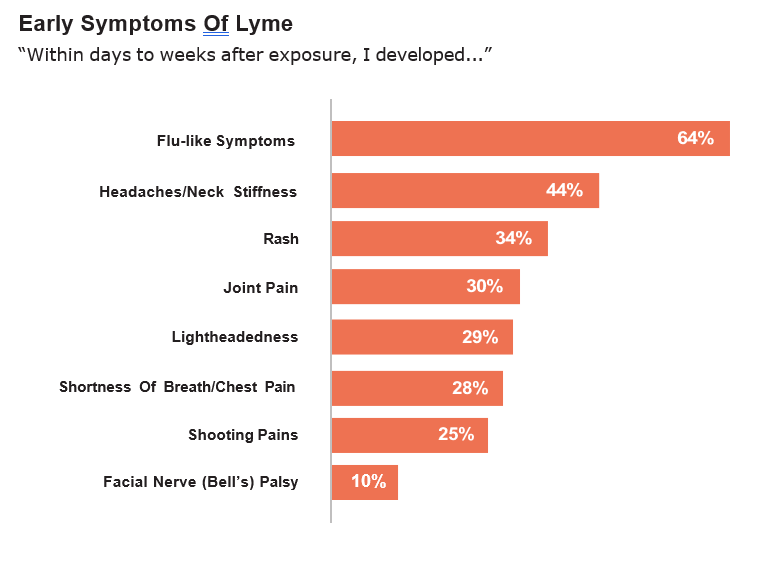
Early (acute) Lyme disease can resemble the flu, with symptoms such as fever, muscle aches, headache, and fatigue. Some people develop a rash called erythema migrans (EM). While often described as a bull’s‐eye, the EM rash can appear in many shapes, sizes, and colors—and does not always have the classic ring pattern. Research shows that fewer than 25% of people with Lyme disease develop this rash at all.
Many people with Lyme disease never realize they were bitten and never see a rash. Others may develop a rash in a place that’s difficult to notice, such as the scalp or back.
In LymeDisease.org’s survey of 4,000 patients with chronic Lyme, only 40% reported having a rash. Erythema migrans (EM) rashes can appear in many forms. They may be round, oval, solid, blotchy, or have a bull’s‐eye pattern. On darker skin tones, EM rashes can be harder to detect and may go unnoticed. The rash also doesn’t
need to appear at the site of the tick bite and can spread across a larger area of the body.
What does the Lyme disease rash look like?
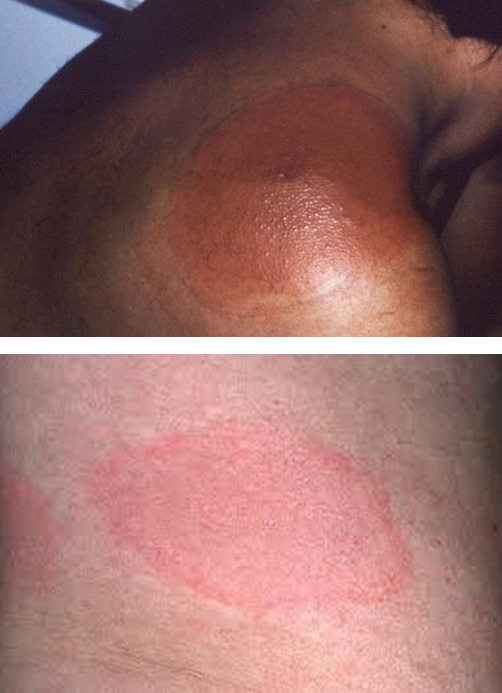
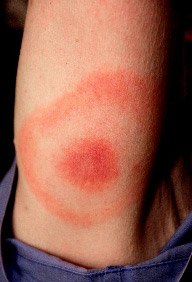
The erythema migrans (EM) rash usually appears a few days to several weeks after a tick bite. It expands gradually over days or weeks and can grow to several inches across. Some rashes develop a central clearing, while others do not. If left untreated, the rash may last for weeks, fade, or even disappear and return.
EM rashes can look very different from one another. They may be round or irregular in shape and can sometimes blister or form a scabby surface. In some cases, the rash looks like a bruise. Lyme rashes are often mistaken for spider bites, ringworm, or cellulitis. Multiple “satellite” rashes may also appear on different parts of the body.
If you develop any type of rash, take a photo and see a healthcare provider promptly. Other early symptoms of Lyme disease can include fever, headache, fatigue, muscle aches, and Bell’s palsy. Some people have no symptoms at all. Those who initially feel well may have a stronger early immune response, but symptoms can still appear months or even years later, often after a major stressor, another illness, or a physical trauma such as a car accident.
The dangers of delayed diagnosis of Lyme disease
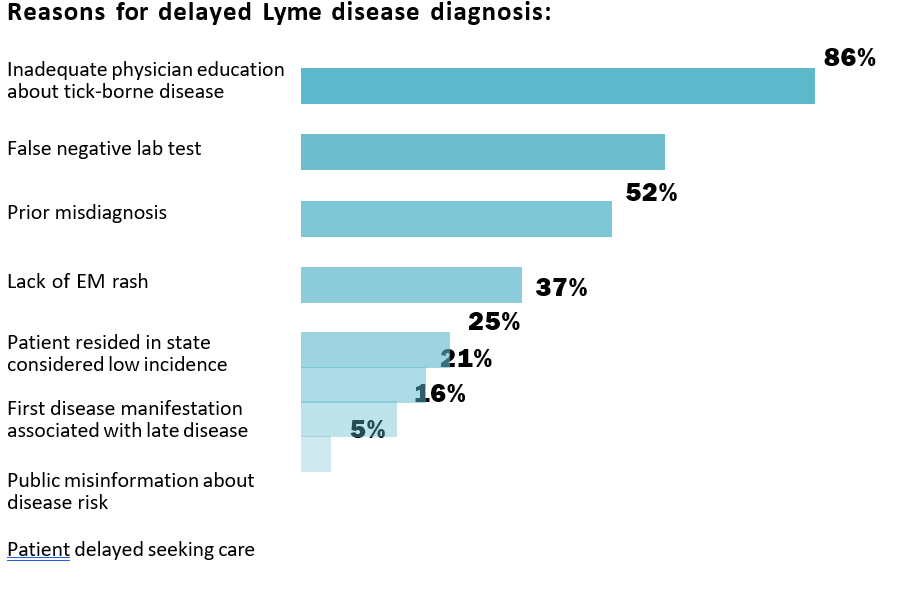
Unfortunately, diagnostic testing is unreliable in the early stages of infection, often giving false negatives. Treatment should not be delayed pending a positive test result if the suspicion of Lyme disease is high (exposure, tick bite, possible rash). Many Lyme practitioners will see acute patients after a tick bite and prescribe antibiotics to help slow the spread of the disease. Early intervention is critical.
Early diagnosis and treatment restore most patients to health and reduce the number who progress to late or chronic Lyme disease. This also lowers the medical and societal costs associated with long‐term illness. It is a winnable battle, but only if the barriers to early diagnosis are recognized and addressed. These barriers include the absence of a visible rash, the failure to recognize the expanding geographic range of Lyme disease, and the limitations of current laboratory tests.
Note: The information presented on this page has been reviewed and approved by a member of our Medical Leadership Board.