
Understanding Ticks
Ticks and Tick-Borne Disease
Ticks are small arachnids that can carry and transmit Lyme disease and other serious infections to humans.
What are ticks and what diseases do they carry?
Ticks are small crawling bugs in the spider family. They are arachnids, not insects. There are hundreds of different kinds of ticks in the world. Many of them carry bacteria, viruses or other pathogens that cause disease in humans and/or animals.
The most common infection carried by ticks in the United States is Lyme disease (Borrelia burgdorferi). Ticks can also transmit ehrlichiosis, Rocky Mountain spotted fever, anaplasmosis, tularemia, babesiosis, bartonellosis, Powassan virus, and various rickettsial infections.
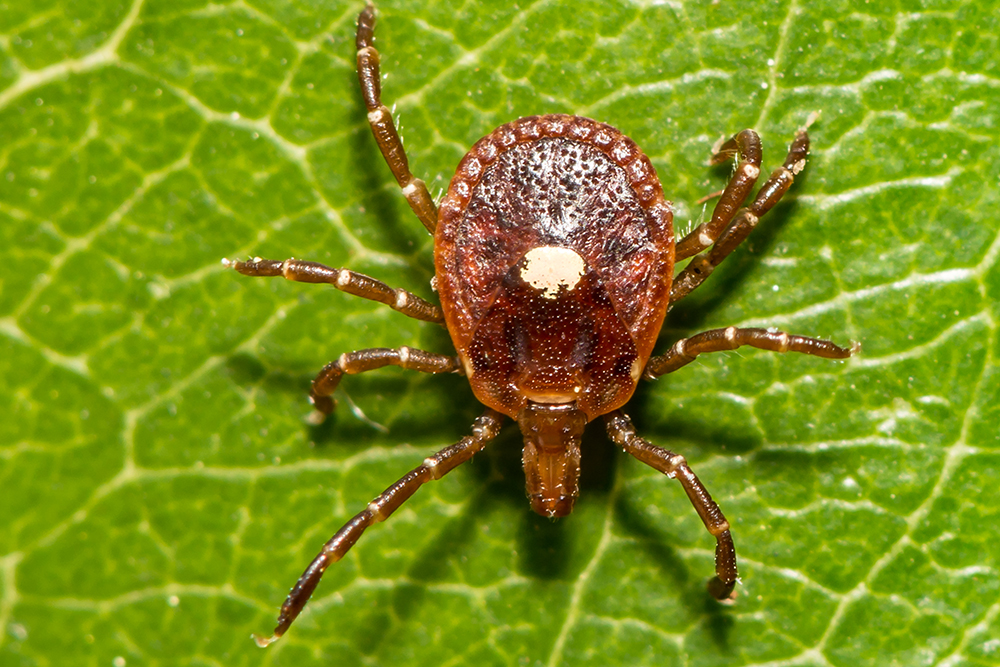
In the Midwestern and Eastern United States, Ixodes scapularis (deer tick) is the primary vector of Lyme disease. On the West Coast, the spirochete is carried by Ixodes pacificus (western blacklegged tick). In the South, lone star ticks (Amblyomma americanum) can cause other illnesses, including ehrlichiosis, a Lyme‑like illness sometimes referred to as STARI, and alpha‑gal syndrome
Tick Life Cycle & Size
What are the life stages of a tick?
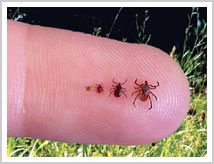
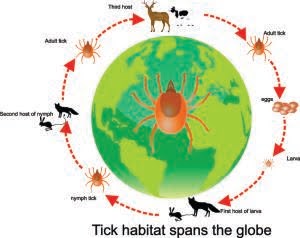
Ticks have four life stages: egg, larva, nymph and adult. In each stage after hatching, they suck blood from animals like mice, squirrels, birds and deer. Then they drop off, enter a dormant period and molt to enter the next stage.
Ticks don’t start out being infected with Lyme. They get it by feeding on an infected animal, often a mouse or other small rodent. Then, they pass it along to the next animal or person they bite.

Lyme Disease Transmission
How long does it take a tick to transmit Lyme?
Experts disagree about how long it takes a tick to transmit Lyme disease. The CDC says that in most cases, the tick must be attached for more than 24 hours.
We think that gives people a false sense of security. In some research studies, 5-7% of nymphs transmitted the Lyme bacteria in less than 24 hours. One paper reported on a case of Lyme disease transmitted after six hours of tick attachment. The risk may be low the first day, but it’s not zero. Unlike other tick-borne diseases, a tick can transmit POW (Powassan virus) while being attached to a person for as little as 15 minutes.
Furthermore, some studies show that only 30% of patients with Lyme disease recall a tick bite. If people don’t even realize that they were bitten, how could they know how long the tick was attached?
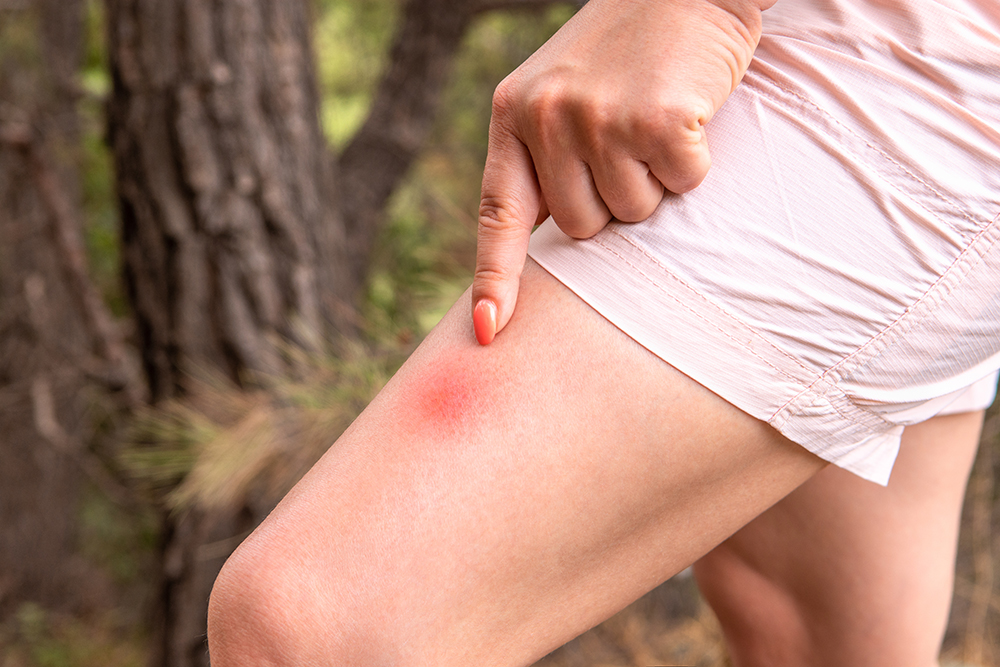
Most tick bites do not itch or hurt because ticks inject saliva into the skin when they bite, which has a numbing effect. This allows them to feed for hours, sometimes even days, without being noticed.
The longer a tick stays on you, the more likely it will transmit disease. It’s important to find and remove any tick as soon as possible.
Can other bugs give me Lyme?
Researchers have found spirochetes in mosquitoes and other blood-sucking insects. But it has not been proven that they can transmit the infection. We believe that science is still young in this research and that if you are bitten by a vector (blood sucking insect or arachnid) and you develop symptoms like Lyme disease, you should see a specialist. Anecdotal cases of Lyme have been reported to physicians after a spider bite, flea bite, etc.
A tick is uniquely suited to carry and spread Lyme disease. Spirochetes have co-evolved with ticks over millions of years. Tick saliva contains immune suppressors that help disseminate the bacteria throughout the host’s body. And, because ticks feed on many different animals, they can spread the disease widely.
Tick Habitat & Risk
Where do we find ticks?
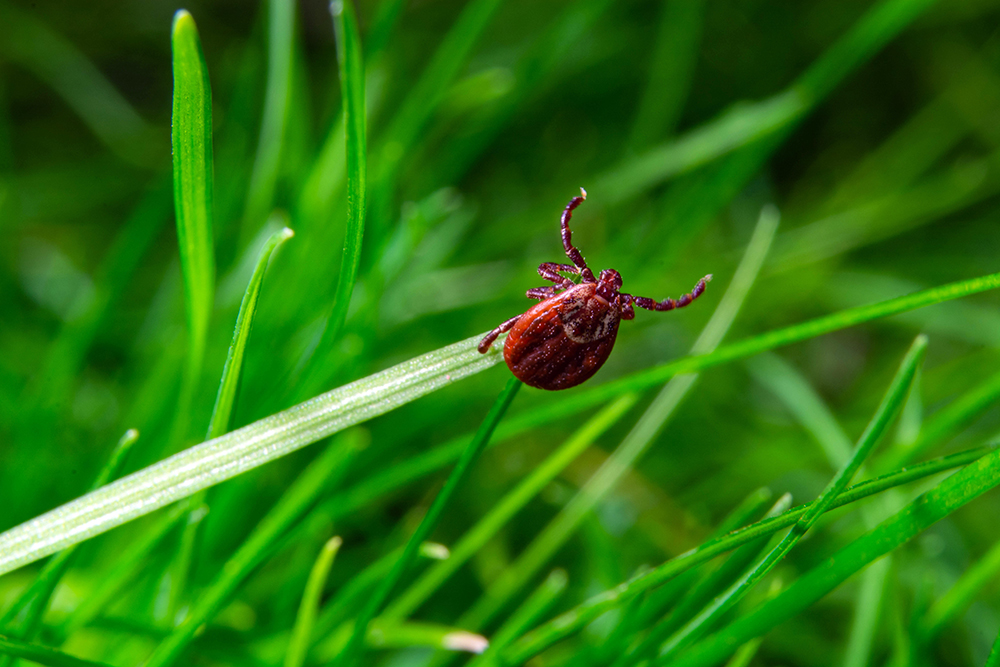
Generally, you can find ticks where the animals they feed on live. This usually includes wooded and grassy areas. Adult ticks “quest” for their next blood meal by climbing grasses or low vegetation and extending their forelegs to detect a passing host. Different species quest in different ways. Blacklegged ticks (Ixodes scapularis) and western blacklegged ticks (Ixodes pacificus) typically wait quietly on low vegetation, while lone star ticks (Amblyomma americanum) also quest but are more active and may move toward a host once they sense heat or carbon dioxide. Nymphs and larvae are typically found in layers of decomposing leaves underneath trees. Ticks thrive in damp environments and are less active in hot, dry weather.
Which ticks should I worry about?
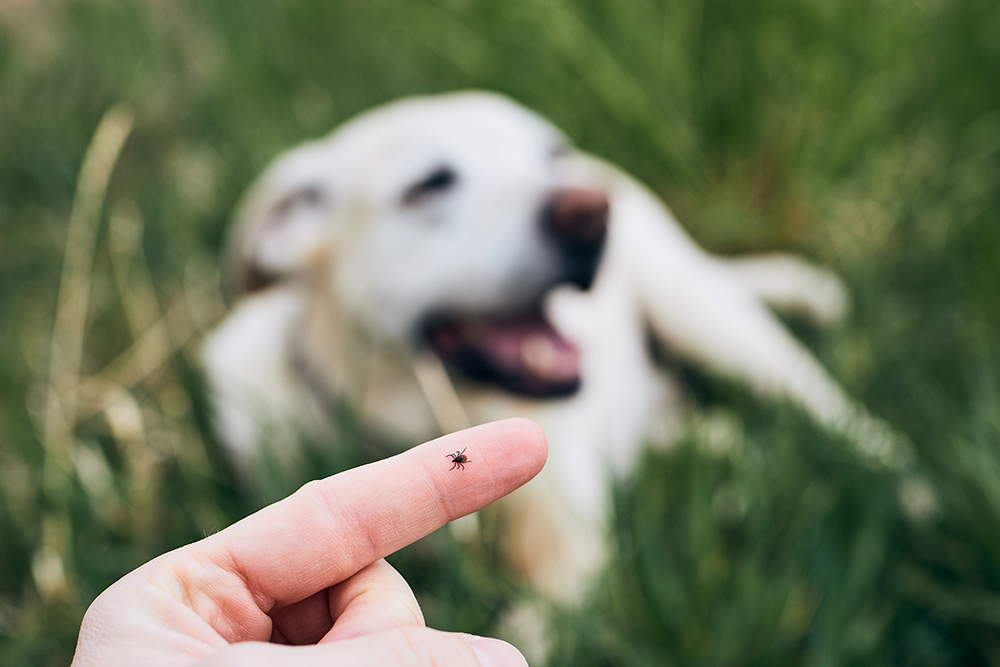
Nymphal ticks cause most cases of Lyme disease. Because nymphs are as small as poppy seeds and their bite is painless, people often don’t realize they have been bitten. Adult ticks can also infect humans but are easier to spot and remove.
Not all ticks are infected. Because tick studies have only been done in a relatively few places, in most of the US, tick infection rates are unknown. Even in places where ticks generally do not carry Lyme, there may be hotspots of infection depending on local conditions. The tick infection rate may also change from year to year, even in one location. We have seen a huge migration of ticks into areas where they were never found before. It is better to be “tick aware” anytime you are out in the open and check for ticks when you return inside.To get a better idea of which tick-borne diseases have been found in your area, check this site.
Animal Hosts
Adult ticks feed and mate primarily on deer. You may also find adult ticks on dogs, horses and other domesticated animals. Nymphs feed primarily on smaller animals. These include squirrels, mice, lizards, rabbits, and birds that feed on the ground. Migratory birds help distribute ticks throughout the country following the migration flight paths.
Know Your Ticks
A multitude of environmental and human factors has created a near “perfect storm” over the past 20 years leading to a population explosion of ticks throughout North America.