I first heard of author Leslie Feinberg in the early 1990s when her first book Stone Butch Blues was released, a legendary novel about a working class gay woman struggling to find herself as she worked in factories and blue collar jobs in the 1960s. Part autobiography, the book introduced Feinberg as a pivotal voice in the LGBT movement and has continued to be cited as one of the most important pieces of written work about lesbian women. It is widely considered around the world as a groundbreaking work about the complexities of gender.
So it was quite a shock today to hear that she had died this past weekend, due to complications from Lyme disease and multiple tick-borne co-infections. She was 65 and died at home in Syracuse, NY, with her partner and spouse of 22 years, Minnie Bruce Pratt, at her side. Her historical and theoretical writing has been widely anthologized and taught in the U.S. and international academic circles. Feinberg authored other non-fiction books, Transgender Warriors: Making History, Trans Liberation: Beyond Pink or Blue, and Rainbow Solidarity in Defense of Cuba, as well as a second novel, Drag King Dreams.
I had known of Feinberg’s health journey and the battles she fought every day. There had been many fundraisers to help her with expenses and medical bills, so often the case in the Lyme community when you hit bottom after spending your savings, cashing out your 401k and your life insurance policy, so that you can continue trying to find answers to whatever this is that has taken over your body and your mind.
Like many of us who have dealt with seeing doctor after doctor trying to get diagnosed, she had an almost four-decade journey before she was diagnosed in 2008 with Lyme and multiple tick-borne co-infections, having been first infected in the early 1970s when little was known about the disease.
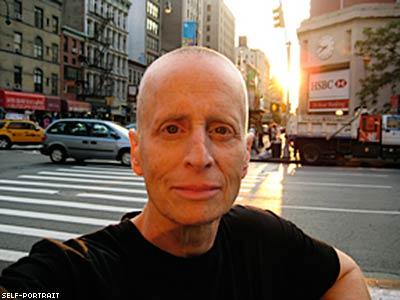
But Feinberg did not let Lyme silence her. When illness would not allow her to read, write, or talk, Feinberg expressed herself through art, picking up a camera for the first time, and created “The Screened-In Series,” a disability-art class-conscious documentary of her Hawley-Green neighborhood photographed entirely from behind the windows of her apartment.
She attributed her health crisis to “bigotry, prejudice and lack of science.” Active prejudice toward her transgender identity made access to health care exceedingly difficult, and lack of science hindered mainstream medicine’s information, treatment, and research about Lyme and its co-infections. She wrote online about these issues in her blog Casualty of an Undeclared War.
“I have Lyme disease and co-infections. I, and uncounted others, are casualties of an undeclared war,” she said, “…A struggle can fight for and win scientific inquiry, and the funds necessary to treat those who are ill—not only for those in the U.S., but around the world….My experience in ILADS care offers great hope to desperately-ill people who are in earlier stages of tick-borne diseases.”
At the time of her death she was preparing a 20th anniversary edition of Stone Butch Blues. She worked on the book up to a few days before she died.
Yet another voice has been silenced by Lyme.
You can read more of Feinberg’s research and thoughts on Lyme disease on her blog.
Click here to read Feinberg’s obituary in The Advocate.
Sandi Bohle is an entertainment lighting designer and Lyme patient/advocate/activist in Los Angeles. She can be contacted at solasdesigns@gmail.com .

Do You Have Lyme Disease?
Use our symptom checklist to better understand possible Lyme disease signs and next steps.
Newsletter Sign-up
Helpful Resources
Support LymeDisease.org
Your support helps us advocate for patients and fund critical Lyme disease research.