
Does Biological Sex Matter in Lyme Disease? The Need for Sex-Disaggregated Data in Persistent Illness

Johnson, L., Shapiro, M., Janicki, S., Mankoff, J., & Stricker, R. B. (2023). Does Biological Sex Matter in Lyme Disease? The Need for Sex-Disaggregated Data in Persistent Illness. International Journal of General Medicine, 16, 2557–2571. https://doi.org/10.2147/IJGM.S406466
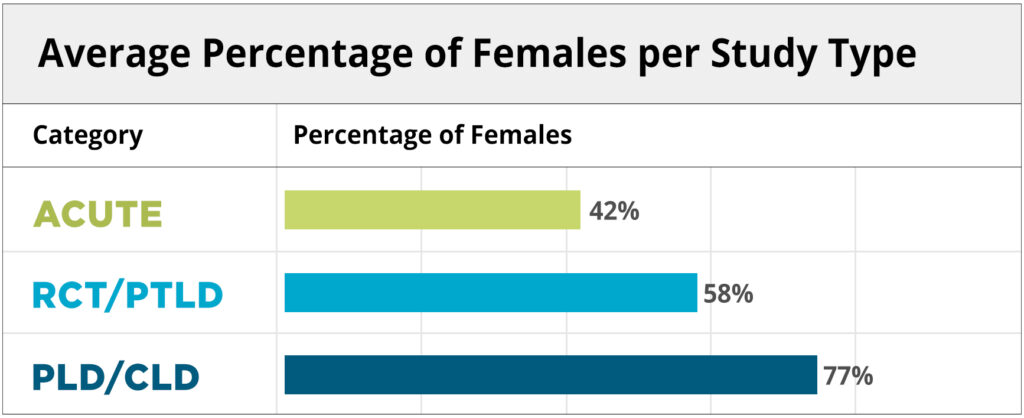
Average percentage of women per study type. RCT/PTLD refers to randomized controlled trials recruiting post-treatment Lyme disease patients using restrictive entry criteria. PLD/CLD refers to persistent or chronic Lyme disease patients who have been clinically diagnosed.

Prior to 2015, relatively few clinical trials included women. In response to the lack of information about women, the National Institutes of Health began requiring researchers to include sex as a biological variable in animal and human studies. This policy change recognized that biological sex can influence how diseases develop, how symptoms appear, and how patients respond to treatment.

Relatively few studies have examined whether men and women experience Lyme disease differently. In this MyLymeData study of 2,170 patients, women reported more tick-borne coinfections, worse symptoms, longer diagnostic delays, more misdiagnoses, and greater functional impairment than men. No meaningful differences were found in antibiotic treatment response or side effects.

The review of clinical trials and data sources also found that women made up a smaller share of acute Lyme disease studies than persistent Lyme disease studies. Restrictive randomized-trial and post-treatment Lyme disease eligibility criteria excluded proportionally more women, while broader persistent or chronic Lyme disease samples included more women and better reflected patients seen in routine clinical practice.

Background. Biological sex can affect disease presentation, progression, and treatment response, yet few Lyme disease studies have been designed to examine sex-based differences or gender bias.

Methods. Researchers analyzed self-reported clinical information from 2,170 MyLymeData participants who remained ill for at least six months after antibiotic treatment. Previous Lyme disease studies were also reviewed to compare the proportion of women by disease stage, data source, and enrollment definition.

Results. Women reported more coinfections, greater symptom severity, longer diagnostic delays, more misdiagnoses, and more functional impairment. Treatment response and treatment-related side effects did not differ significantly between men and women. Broader clinically oriented persistent Lyme disease samples included more women than restrictive randomized-trial and post-treatment Lyme disease samples.

Conclusion. Lyme disease research should incorporate biological sex as a distinct variable and report sex-disaggregated findings so that clinically important differences are not obscured.

Study Purpose

The study examines whether men and women with persistent or chronic Lyme disease differ in diagnostic experiences, symptom severity, functional impairment, treatment response, and side effects. It also evaluates how research definitions and eligibility criteria affect the representation of women in Lyme disease studies.

Key Findings

Women experienced significantly higher rates of several diagnostic and functional burdens, including late-stage diagnosis, long diagnostic delays, repeated misdiagnosis, disability, bed days, and use of special equipment. Women also reported more severe fatigue, muscle aches, joint pain, sleep impairment, gastrointestinal symptoms, and headaches.

Why This Matters

Restrictive research definitions can produce study populations that do not adequately represent patients encountered in clinical practice. Reporting sex-disaggregated data can improve study design, reveal clinically meaningful differences, and reduce the risk that women’s experiences are overlooked.

The complete published article contains the full reference list, study tables, clinical comparisons, and the data sources used to compare acute Lyme disease, restrictive RCT/PTLD samples, and broader PLD/CLD samples.

Study Details

Share This Study