
Healthcare Access and Burden of Care for Patients with Lyme Disease: A Large United States Survey

Johnson, L., Aylward, A., & Stricker, R. B. (2011). Healthcare access and burden of care for patients with Lyme disease: A large United States survey. Health Policy, 102(1), 64–71. https://doi.org/10.1016/j.healthpol.2011.05.007
How many physicians before diagnosis? Seventy-two percent of respondents saw four or more physicians before receiving a Lyme disease diagnosis.

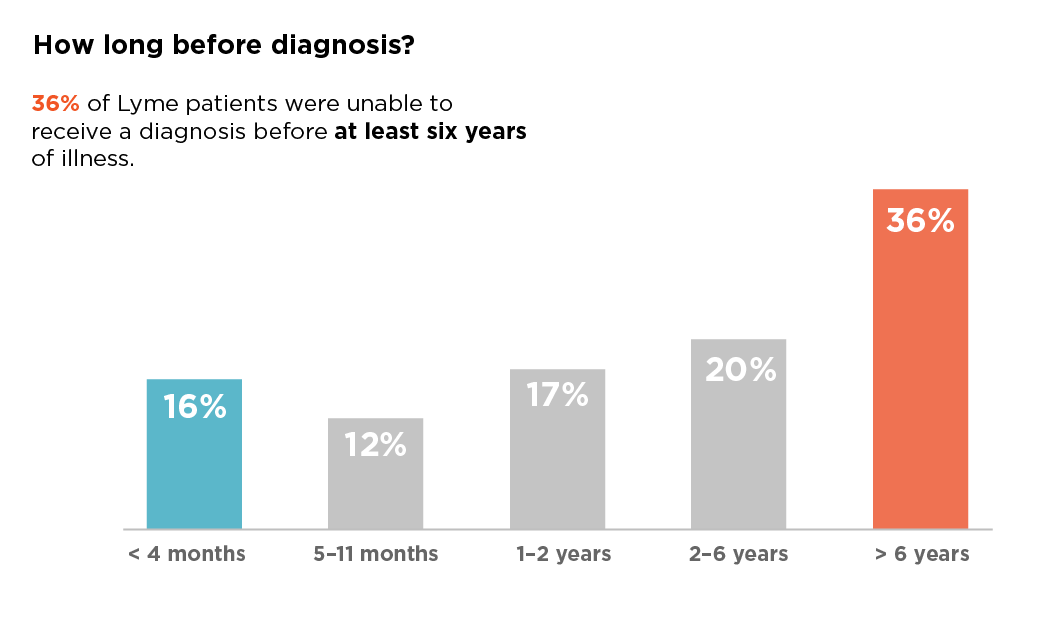
This study of over 2,400 patients highlights the immense physical, financial, and emotional burden carried by Lyme disease patients. Delayed diagnosis is common, with 72% seeing four or more doctors before being diagnosed. Nearly half had Lyme disease for more than 10 years and traveled over 50 miles to receive care. A quarter of respondents had been on public support or received disability benefits due to Lyme disease symptoms. The findings also show that suffering often continues even after standard antibiotic treatment. Most participants experienced symptoms lasting six months or longer despite receiving at least 21 days of antibiotics.

Objective. The survey examined access to healthcare and the burden of illness among United States patients with clinically diagnosed Lyme disease, chronic symptoms, and positive laboratory testing.

Methods. Responses from 2,424 patients were analyzed. The survey assessed diagnostic delays, number of clinicians consulted, distance traveled for care, disease duration, treatment history, emergency-room use, employment effects, and reliance on disability or public assistance.

Results. Half of respondents reported seeing at least seven physicians before receiving a Lyme disease diagnosis. Nearly half had been ill for more than 10 years and traveled over 50 miles for treatment. More than half had visited an emergency room because of their symptoms, and one quarter had received public support or disability benefits.

Conclusion. Patients frequently experienced extensive diagnostic delays, poor access to knowledgeable care, continuing symptoms after treatment, and a severe personal and financial burden.

Study Purpose

This national survey was designed to document how difficult it can be for patients with long-standing Lyme disease to obtain diagnosis and treatment and to measure the personal, medical, and economic burden associated with the illness.

Access to Diagnosis and Care

Many respondents consulted numerous clinicians before diagnosis and traveled substantial distances to obtain treatment. The diagnostic journey often continued for years, leaving patients without timely care during a period when treatment may be more effective.

Burden of Illness

Participants reported persistent symptoms despite antibiotic treatment, substantial emergency-room use, loss of work capacity, disability, and reliance on public support. The results illustrate that the consequences of delayed diagnosis extend far beyond the initial illness.

Conclusion

The authors concluded that patients with Lyme disease frequently face delayed diagnosis, limited access to appropriate healthcare, and a severe long-term burden. Improving early diagnosis and access to knowledgeable clinicians could reduce both patient suffering and downstream costs.

The publisher’s article page provides the citation, abstract, article information, and access options for the complete study and its reference list.

Study Details

Share This Study