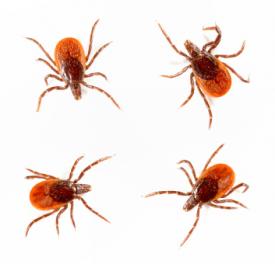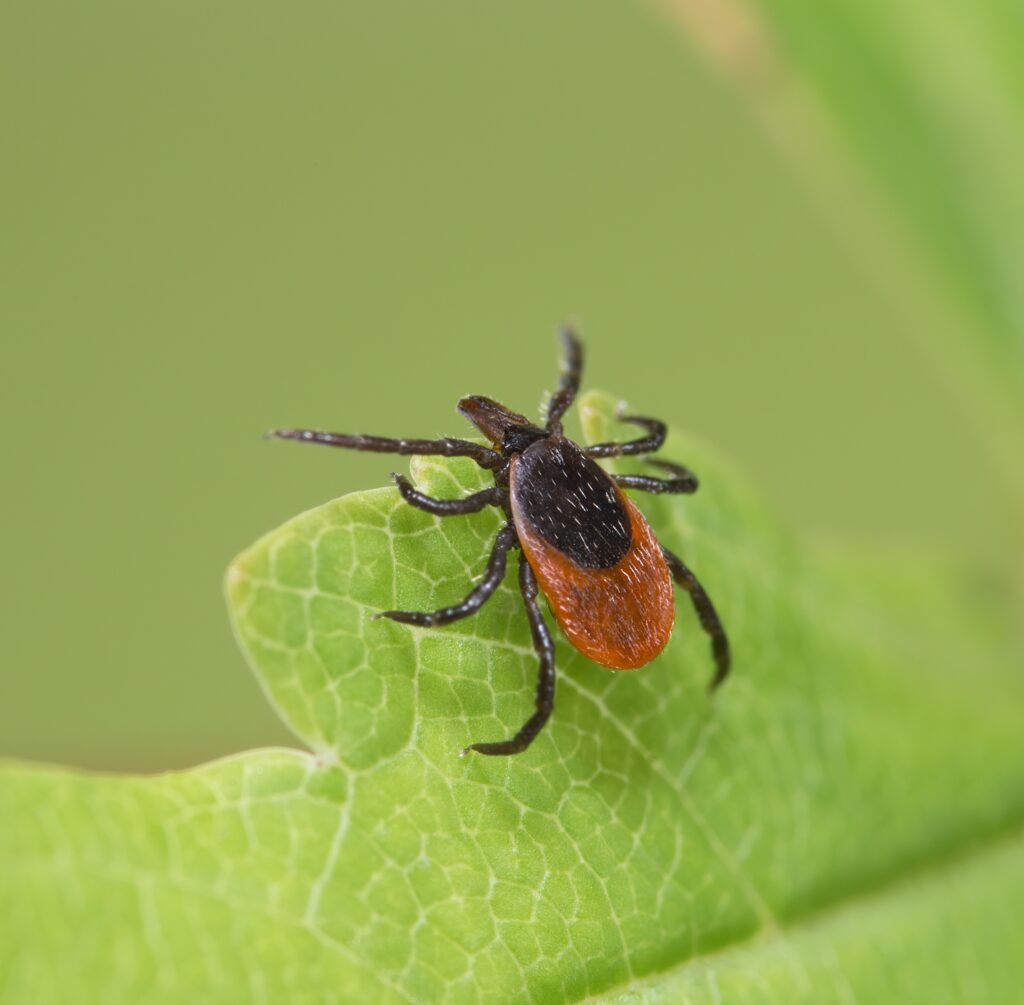
HARDSCIENCEONLYME: Researchers Discover New Tick-Borne Illness Caused by Borrelia miyamotoi

Researchers from Russia worked with Drs. Durland Fish and Peter Krause of Yale to demonstrate that the B. miyamotoi caused human illness.

Platonov AE, Karan LS, Kolyasnikova NM, Makhneva NA, Toporkova MG, Maleev VV, et al. Humans infected with relapsing fever spirochete Borrelia miyamotoi, Russia. Emerg Infect Dis. 2011 Oct; [Epub ahead of print]

Transoverian transmittion of B. miyamotoi is discussed here.

The HARD SCIENCE ON LYME blog is written by Lorraine Johnson, JD, MBA, who is CALDA’s Chief Executive Officer. Contact her at lbjohnson@lymedisease.org.

Similar Posts

  • HARD SCIENCE ON LYME: Blood Transfusion Risk of Babesia Unacceptable

    David Leiby, of the Red Cross, has declared the risk of blood transfusion for Babesia microti to be unacceptably high. Babesia microti is a coinfection of Lyme disease that is transmitted primarily by ticks. Over the past 30 years, between 70-100 cases of transfusion transmitted Babesia have been reported, with at least 12 fatalities. Although the need to screen for the parasite which lives in red blood cells is now recognized as urgent, the method of screening blood has yet to be determined and several obstacles remain before screening practices are adopted. However, according the Leiby, failure to screen is "no longer a viable alternative". The abstract to the article follows the jump. . .

  • HARD SCIENCE ON LYME: Removal of Western fence lizard decreases number of nymphal ticks and number of infected nymphal ticks.

    A group of researchers, (Swei, Ostfeld, Lane, and Briggs), did a study on the western fence lizard recently that produced some interesting results. The life cycle of the tick involves three stages and three blood meals. Ticks are born without the Lyme disease bacteria. However, they may acquire it during their first blood meal (as larval ticks), their second blood meal (as nymphal ticks) or their third blood meal (as adult ticks). Lizards host up to 90% of larval and nymphal I. pacificus ticks. Western fence lizards (as well as the southern alligator lizard) are not competent hosts for Lyme disease bacteria. This means they cannot transmit Lyme disease to feeding ticks. But even better, their immune system actively kills the Lyme spirochete in ticks that feed on them. So a tick that feeds on one of these lizards will take its next blood meal without the bacteria that transmits Lyme disease. This eliminates the risk of people contracting Lyme disease from the ticks that have previously fed on the lizard and reduces the infection rate of the ticks generally in the area. You would think that the number of infected ticks would go up in the absence of the lizard that kills the Lyme bacteria. Not so. . . Find out why after the leap.

  • HARD SCIENCE ON LYME: Research Finds Bartonella Transmission from Tick to Host

    It has long been known that ticks harbor Bartonella and that humans who have Lyme disease may also have Bartonellosis. However, the actual transmission of Bartonella from tick to host has not been demonstrated until a mouse study by Drs Reis and colleagues was published in May 2011. The study is available free on line for those interested. “This work represents the first in vivo demonstration of a Bartonella sp. transmission by ticks. It . . . corroborate[s] a prospect that ticks play a role in the natural cycles of some of the bartonellae including those pathogenic for humans. Consequently, bartonelleosis should be included in the differential diagnosis for patients exposed to tick bites.”

  • HARDSCIENCEONLYME: Lyme Culture Made Easy, Antibiotic Effectiveness, and Mechanisms of Persistence

    Dr. Eva Sapi and colleagues have published an important study today, "Evaluation of in-vitro antibiotic susceptibility of different morphological forms of Borrelia burgdorferi". I have included the link to the article, which is available free of charge at Dove Press, at the end of this post and encourage you to read it. The study is broad ranging, but makes a significant contribution to Lyme research in a number of areas: culturing techniques, cyst and spirochete antibiotic susceptibility, and the role of biofilms in persistence.

  • HARDSCIENCEONLYME:  How Tick-Borne Diseases like Babesia and Anaplasma Persist

    It is important to understand mechanisms of persistence in tick-borne diseases.  Microbes use different mechanisms to evade the immune system and survive. A study by Anthony Barbet of the University of Florida describes the mechanisms by which babesiosis and anaplasmosis persist in animals.  He notes that many vector-borne diseases remain resistant and states: "Some of the most intransigent of these are infections that induce a 'carrier' state, where the animal remains infected, is still able to transmit organisms to the vector, but may show disease symptoms intermittently or not at all. Indeed, it may be difficult to detect the infection by classical means."  He points to Babesia and Anaplasma as prime examples of this type of persistence and discusses how new and sensitive molecular diagnostic methods have made it possible to demonstrate that "a typical infection course consists of numerous relapsing peaks of organisms separated by time periods when they are not detected."

  • HARDSCIENCEONLYME: Horse Treated for Lyme Improves, Relapses, then Dies

    A 12-year-old thoroughbred was examined because of signs of depression, neck stiffness, and poor performance and a reluctance to raise its neck and head above a horizontal plane. The horse responded well to doxycycline treatment for 60 days and returned to normal exercise. However, 60 days after treatment was discontinued, the horse again developed a stiff neck and rapidly progressive neurologic deficits. The horse's condition deteriorated rapidly despite IV antibiotic treatment, and the horse was euthanized. Postmortem examination revealed findings consistent with a diagnosis of neuroborreliosis (leptomeningitis, lymphohistiocytic leptomeningeal vasculitis, cranial neuritis, and peripheral radiculoneuritis with Wallerian degeneration). Nervous system infection with B burgdorferi should be considered in horses with evidence of meningitis and high or equivocal serum anti-B burgdorferi antibody titers. Evaluation of immune function is recommended in adult horses evaluated because of primary bacterial meningitis.