In my years of Lyme advocacy work, I have heard from hundreds, maybe thousands, of people who are searching for the “magic bullet,” the one treatment that will turn their lives around and get them back into the land of the healthy.
I have also met or heard from many people who have recovered their health substantially and are doing quite well now. But, I’ve never heard of anybody who actually found a magic bullet for Lyme. No ONE thing fixed their situation—though some things were more helpful than others.
Typically, it takes a combination of drugs, supplements, assorted therapies, diet, life style changes and the like to pull it off. And here’s the rub. It may take a different combination for each person.
That’s why being a Lyme patient (or the loved one of someone with Lyme) can feel an awful lot like doing advanced university work—reading myriad books and scouring the internet for information. It’s why it’s important for those with Lyme to find out about different possibilities. (For instance, many people in my Lyme support group say they feel better on a gluten-free diet. How would they know if they hadn’t heard about it and decided to try it?)
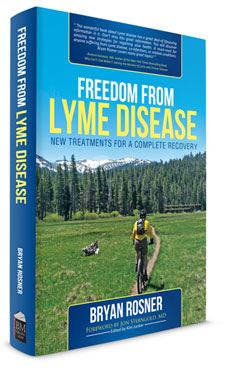
In his latest book, Freedom from Lyme disease: New treatments for a complete recovery (BioMed Publishing, 2014), four-time Lyme author Bryan Rosner doesn’t offer any magic bullets either. Instead, he states flat-out: “You should never believe someone who says, ‘this is the best treatment for Lyme disease, period.’ “
Rosner says searching for the “best” treatment can send you on a wild goose chase, because Lyme disease is such a complex illness with so many complicating factors. There’s nothing one-size-fits-all about it. Instead, he offers a method, a system, what he calls a “template”–a way to evaluate different approaches to treatments to decide whether they are worth trying.
Furthermore, he writes, you should be asking “what layer of the onion am I currently dealing with, and what treatment should I use for that layer?”
Rosner is not a doctor, but rather a writer/researcher/publisher/Lyme disease survivor who has devoted many years to learning about tick-borne illness. This book focuses on helping the reader peel the onion of poor health, proposing a variety of treatments for your consideration.
“While having a Lyme doctor is important,” Rosner writes, “I have observed that the patients who do the best are those who take control of their own recovery, become educated, and learn to be the captains of their healing ships.”
“Freedom from Lyme disease” summarizes many different protocols, individual drugs and supplements. The book also devotes chapters to parasites and worms, yeast and candida, and adrenal fatigue—all topics that Lyme patients need to be familiar with. It also discusses potential health benefits of the Paleo Diet.
If someone is brand new to Lyme disease, I’d recommend that they start with a different book from Rosner’s publishing company, “The Beginner’s Guide to Lyme disease,” by Dr. Nicola McFadzean, ND. “Freedom from Lyme disease” might be overwhelming to a complete newbie. But, if you’ve been peeling that onion for a while, you’re probably ready for the healing insights to be gleaned from this book.
TOUCHED BY LYME is written by Dorothy Kupcha Leland, LymeDisease.org’s VP for Education and Outreach. Contact her at dleland@lymedisease.org.

Do You Have Lyme Disease?
Use our symptom checklist to better understand possible Lyme disease signs and next steps.
Newsletter Sign-up
Helpful Resources
Support LymeDisease.org
Your support helps us advocate for patients and fund critical Lyme disease research.