“Managing” Lyme patients? How about treating them?
by Daniel J. Cameron, MD, MPH “Minds are like parachutes. They only function when open.”…
New York State Senator Sue Serino, Chair of the NYS Senate Taskforce on Lyme and…
This press release from the Lyme Disease Association, provides important links and background information about…
Our latest issue looks at the troubling case of Vicki Logan, a cautionary tale by…
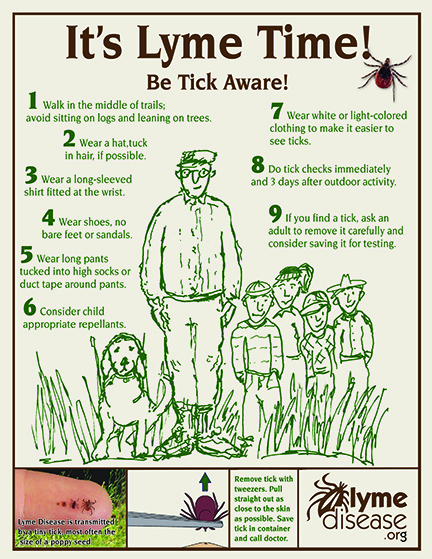
As winter weather wanes, millions of nymphal ticks are hatching out in the woods, fields and backyards in many parts of the United States.
At their annual meeting a few years ago, the Infectious Diseases Society of America adopted a policy of opposing patient-sponsored legislation. They have been true to their word. They have opposed legislation in Pennsylvania, Massachusetts, and Connecticut and have lobbied for their point of view in Rhode Island and Maine. Continuing on the same path, last year they persuaded Health Subcommittee Chairman Frank Pallone that the federal bill somehow mandated long-term treatment. Pallone refused to allow the bill out on the floor and it died in his subcommittee. IDSA is now working on legislators to derail this year's federal bills. Their message may be flawed, but they are sticking to it. It falls to patient community to counter the misinformation.
There’s good news for the Lyme community in a House Appropriations bill that just emerged from committee. Although the economic downturn has forced many programs covered by the bill to be reduced or even cut out entirely, the measure increases the Lyme disease budget of the Centers for Disease Control.
You never pass legislation in a vacuum. The backdrop for the ongoing efforts to pass the Lyme bills included, in August 2005, Hurricane Katrina. In September, 150,000 people gathered in Washington DC to protest the Iraq war and the US death toll approached 2,000. Then in October, a grand jury indicted “Scooter” Libby, Vice President Dick Cheney's Chief of Staff, on felony charges. 2006 brought new challenges and distractions for Lyme advocates, too. With all these pressing issues to deal with, how could we expect legislators to fit Lyme disease legislation into their calendars?
It was 2005, the first session of the 109th Congress. There were two competing bills in the House, and no Senate bill. No one knew what the senators would do. All we could do was wait… and hope. Finally, we had our answer, but the landscape was shifting. It might be impossible to pass legislation, even if everyone united behind a single bill.
Some advocates had not been satisfied with the amended LIFT bill that had passed the Senate on consent in 2002. Since many people seemed unclear on the exact provisions of the different versions of the Lyme bills, LDA president Pat Smith wrote a letter clarifying differences between the original LIFT bill and the amended version that the senators had passed.
End of content
End of content