
TOUCHED BY LYME: How to still have fun when you’re energy-sapped
The CFIDS (Chronic Fatigue) Association of America pulled together a list of low-energy entertainment ideas. See what you think.
This blog has several goals. First, to explore the personal side of Lyme disease and how it affects individuals and families. Second, to highlight useful information for people seeking answers about this complicated illness. Third, to help foster a sense of unity and shared purpose among the many diverse members of the Lyme community. Dorothy, who serves as President of LymeDisease.org, has a family member with Lyme disease. She is co-author of a book called When Your Child Has Lyme Disease: A Parent’s Survival Guide.
The CFIDS (Chronic Fatigue) Association of America pulled together a list of low-energy entertainment ideas. See what you think.
Almost every day, someone will post the following question on one of the many Lyme-related on-line support groups: I'm newly diagnosed (or think I might have Lyme.) How can I find out what I need to know?
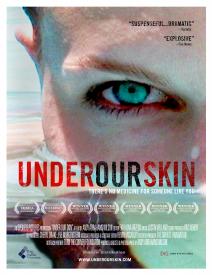
I don’t know about you all, but I’m terribly disappointed that I live too far away to attend any of the moviehouses showing Under Our Skin this week. After all, the theatrical release of this film is one of the biggest events to hit the Lyme world, ever. So, I’m making up for it by throwing a “virtual” theater party…and I hope you’ll join me.
The theatrical release of the Lyme documentary "Under Our Skin" is almost upon us. There is still time for you to help fill those theater seats! One member of an on-line support group came up with some creative ideas for getting the word out that just about anybody could do.
Let's say your family has been through the emotional meat grinder of dealing with a child who has Lyme disease. Then, after what may be years, your child's health significantly improves. How do you return to day-to-day normalcy? How do you deal with the very real fears that symptoms may be returning? Guest blogger Sandy Berenbaum, LCSW, BCD, a Lyme-literate family therapist, discusses a game plan for this new phase of your family's life.
Some people with Lyme disease develop a host of related problems, like extreme sensitivity to light, sound, and various chemicals in the environment. (This last condition is called multiple chemical sensitivity, or MCS. For people who have it, being around gasoline fumes, cologne, and even clothes washed in certain detergents, can literally be life-threatening.) A California teenager with Lyme and the above-mentioned conditions recently found herself in a harrowing encounter with the law.
ATTACK—A STORY OF LYME DISEASE is a most unusual group of photographs on display in the central California coastal town of Arroyo Grande. The pictures are the work of Cal Poly student photographer Brianna Nosler, who did them as her senior project. Because Brianna is majoring in Art Design, the images have almost a high fashion quality to them. Yet the story they tell is devastating, gritty, and real.
My recent blog posting about the educational challenges faced by children with Lyme disease prompted a thoughtful letter from Lyme-literate psychotherapist Sandy Berenbaum. Her years of counseling families dealing with Lyme disease has given her extensive insight into how schooling enters into the picture. Read her letter here.
The long-awaited theatrical release of the Lyme documentary Under Our Skin is almost here. The film opens at New York’s IFC Center on June 19 and at Beverly Hill’s Laemmle Music Hall Theater on June 26.
Although other cities are on the list, these first two are of primary importance. How the film does in New York and Los Angeles will dictate how widely it will be picked up nationwide. Big crowds on the opening weekends in these two cities will prompt more and more theaters across the country to book the film.
Here’s an easy way to help get the word out about Lyme disease. Costs nothing, and virtually anyone can do it. Write a letter to the editor of your local small-to-medium sized paper. (Unfortunately, it’s harder to get them printed in really big newspapers, like the Los Angeles Times or the Washington Post. But smaller papers typically are looking for that local touch.)
End of content
End of content