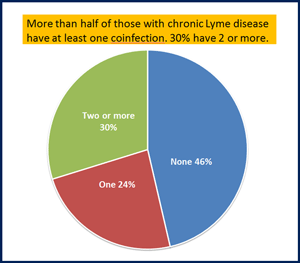
It turns out that coinfections are the norm. Laboratory confirmed co-infections were reported by 53% of respondents and 30% reported two or more co-infections. Similar results were found in a study of 106 patients by Dr. Janet Sperling and colleagues in Canada, with 50% reporting laboratory confirmed coinfections and 36% reporting two or more.
The most common in our study were Babesia (32%), Bartonella (28%), and Ehrlichia (15%).
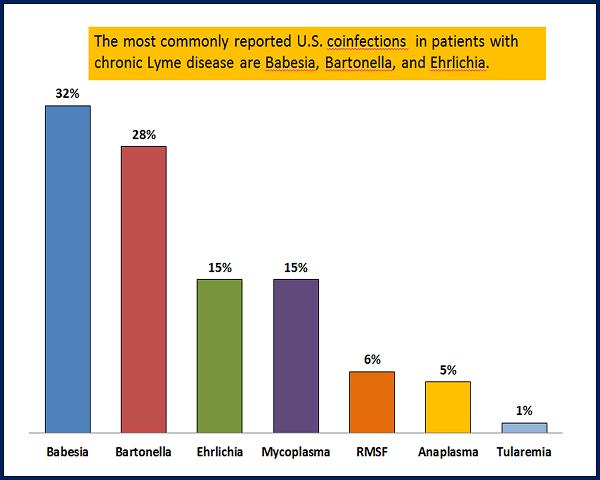
In Sperling’s the most common coinfections were Bartonella (36%) and Babesia (19%), followed by Anaplasma (13%). The difference in which infections are most prevalent may reflect geographical factors given that Sperling’s study involved primarily Canadian patients with Lyme disease. (Note: Although ticks and humans are known to be infected with Bartonella, the mechanism for transmission has not been resolved.)
This study makes it clear that co-infections are common in those with chronic Lyme. We don’t know the rate of co-infections among those with early Lyme disease. It may be that patients with early Lyme disease have lower rates of co-infections. If so, may help explain why those with chronic Lyme are so sick.
The study was a joint effort of LymeDisease.Org and Prof. Jennifer Mankoff at Carnegie Mellon University.
The LYME POLICY WONK blog is written by Lorraine Johnson, JD, MBA, who is the Executive Director of LymeDisease.org. Contact her at lbjohnson@lymedisease.org. On Twitter, follow me @lymepolicywonk.
RESOURCES:
Johnson, L., Wilcox, S., Mankoff, J. and Stricker, RB (2014) Severity of Chronic Lyme Disease Compared to Other Chronic Conditions: A Quality of Life Survey. PeerJ, DOI 10.7717/peerj.322. (Open access.)
The press release for the survey is here.
The Sperling study is also available open access.
This blog is the second in a series of blogs on the Quality of Life Survey. (Stay posted!) Other blogs in the series include:
Survey Results Published! Chronic Lyme Patients Suffer Poor Quality of Life and High Rates of Disability and Unemployment

Do You Have Lyme Disease?
Use our symptom checklist to better understand possible Lyme disease signs and next steps.
Newsletter Sign-up
Helpful Resources
Support LymeDisease.org
Your support helps us advocate for patients and fund critical Lyme disease research.