
Persistent Borrelia Infection in Chronic Lyme Disease: A Review of the Medical Literature

Stricker, R. B., Fesler, M. C., & Johnson, L. (2026). Persistent Borrelia infection in chronic Lyme disease: A review of the medical literature. Advances in Infectious Diseases, 16(1), 73–87. https://doi.org/10.4236/aid.2026.161005
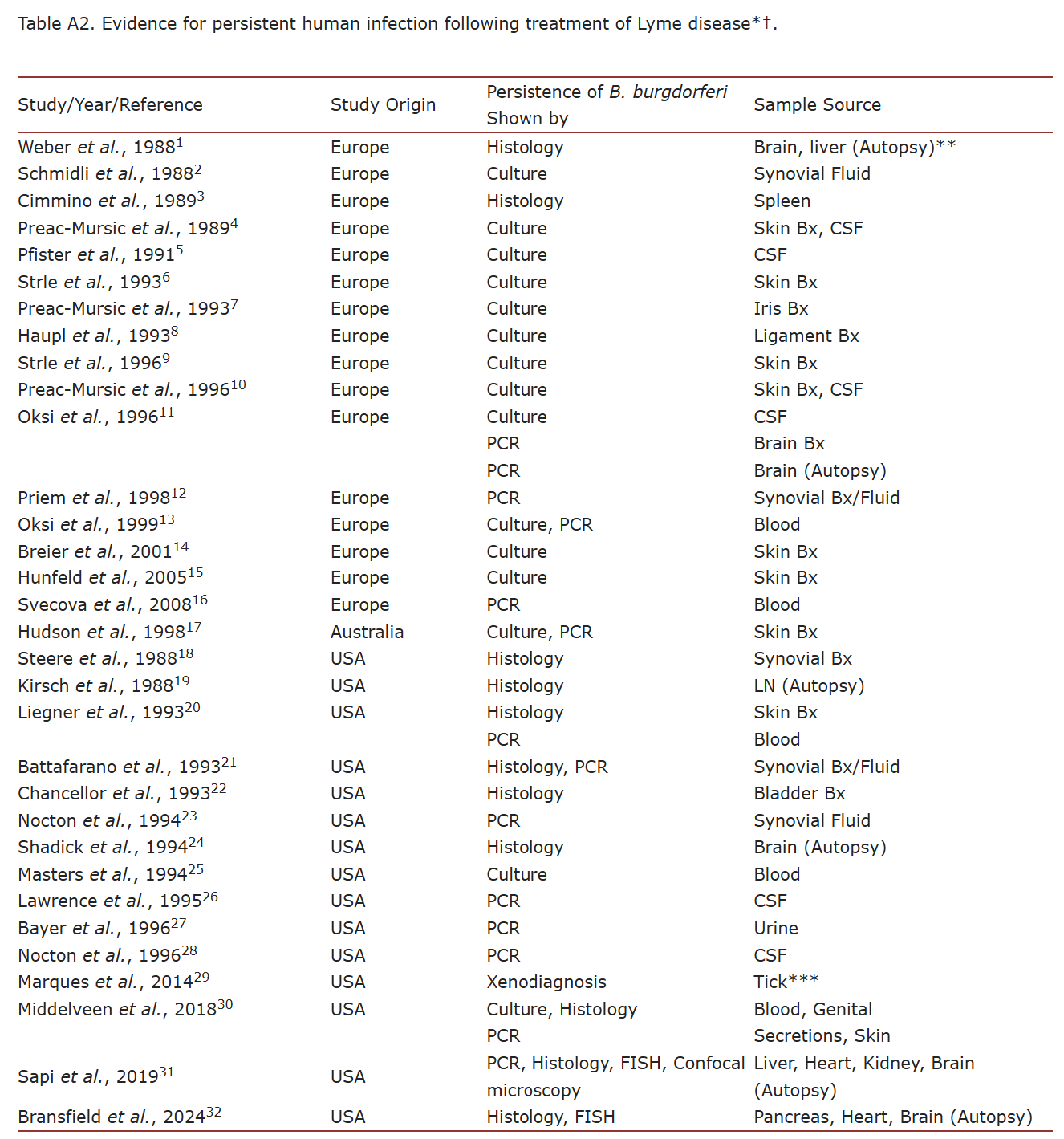
Evidence for persistent human infection following treatment of Lyme disease.

Dr. Raphael Stricker, Lorraine Johnson, and Melissa Fesler conducted a review of the medical literature to identify studies demonstrating persistent Borrelia infection in both animal models and humans.

This literature review presents the evidence for persistent infection with B. burgdorferi and provides a resource for academics and clinicians who require further validation for chronic Lyme disease. Evidence of persistence was found in 32 human studies and 24 animal studies (13 rodent, 2 canine, 7 monkey, and 2 horse). Borrelia burgdorferi was detectable for 2–46 months after antibiotic therapy in rodents, dogs, monkeys, horses, and humans.

Abstract. Chronic Lyme disease remains controversial because of disagreement over whether persistent infection with Borrelia burgdorferi can cause continuing symptoms in untreated or undertreated patients. A review of the medical literature identified 56 studies confirming persistence.

Evidence from animal models and human studies included direct and functional detection through culture, histology, and xenodiagnosis after antibiotic therapy. The review also considers the potential roles of cystic forms and biofilms and calls for further research into the mechanisms of persistent infection.

Study Overview

The authors reviewed medical literature from PubMed and Google Scholar for animal and human studies demonstrating persistent Borrelia infection through direct or functional testing methods.

Key Findings

The review identified 24 animal studies and 32 human studies supporting persistence. Viable spirochetes were demonstrated after treatment in multiple studies through culture, histology, or xenodiagnosis. The paper also discusses cystic forms, biofilms, and other mechanisms that may help the organism evade immune responses and antibiotic therapy.

Conclusion

The authors conclude that evidence from animal models and human studies supports persistent spirochetal infection as a possible cause of chronic Lyme disease and that understanding the mechanism of persistence may help guide targeted treatment research.

The published article contains the complete reference list, including the animal-model studies summarized in Table A1 and the human persistence studies summarized in Table A2.

Study Details

Share This Study