
NEWS: Can you tell the tick from the poppy seed?

The TickEncounter Resource Center at the University of Rhode Island has a lot of good educational materials about ticks on their website, including photos like this one.
The TickEncounter Resource Center at the University of Rhode Island has a lot of good educational materials about ticks on their website, including photos like this one.

The federal Tick-Borne Disease Working Group met for two days this week. Scroll down to…
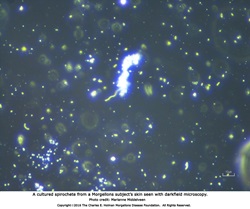
Press release from Charles E. Holman Morgellons Disease Foundation June 15, 2016 Until recently, Morgellons…
The federal Tick-Borne Disease Working Group finished up what was supposed to be its last…

Health officials in Ireland claim there were only four cases of Lyme disease in their…

The New York Times article “New Infection, Not Relapse, Brings Back Lyme Symptoms, Study Says” published on November 14 sounds like it is about a study about the cause of chronic Lyme disease. But it’s not. None of the patients in this small sample (17) had chronic Lyme disease. Nor was this a study about the persistent cognitive impairment, pain, and fatigue symptoms of chronic Lyme that force 25% of chronic Lyme patients onto disability. The study looked at people diagnosed with an EM rash, promptly treated, and restored to health, who over a 10year period, developed another EM rash and required treatment. Hardly, surprising in an endemic area, like New York and certainly not “big news.” Also not disputed is that most (not all, but most) patients diagnosed on EM can be successfully treated. But a study of patients with EM or recurring EM is not a study of patients with chronic Lyme disease. And you cannot compare apples to oranges in a study like this. Patients were justifiably outraged when the NY Times said the study challenged the notion the Lyme disease can become a chronic illness.

Liz Schmitz, of the Georgia Lyme Disease Association, discusses important new research indicating that yes, folks, there is indeed Lyme disease in the southern US.
