LYMEPOLICYWONK: Do antibiotics help patients with Lyme disease who are also diagnosed with MS?

Periodically, I post information about some of the findings from our big data project, MyLymeData. We call these “Quick Bytes.” In April, my Quick Byte on neurologic Lyme disease focused on how often Lyme patients are misdiagnosed with a neurologic condition. The blog included a brief survey for those whose neurologic Lyme had been misdiagnosed. The survey asked about any antibiotic treatment they may have received. I report on the results of that survey here today.
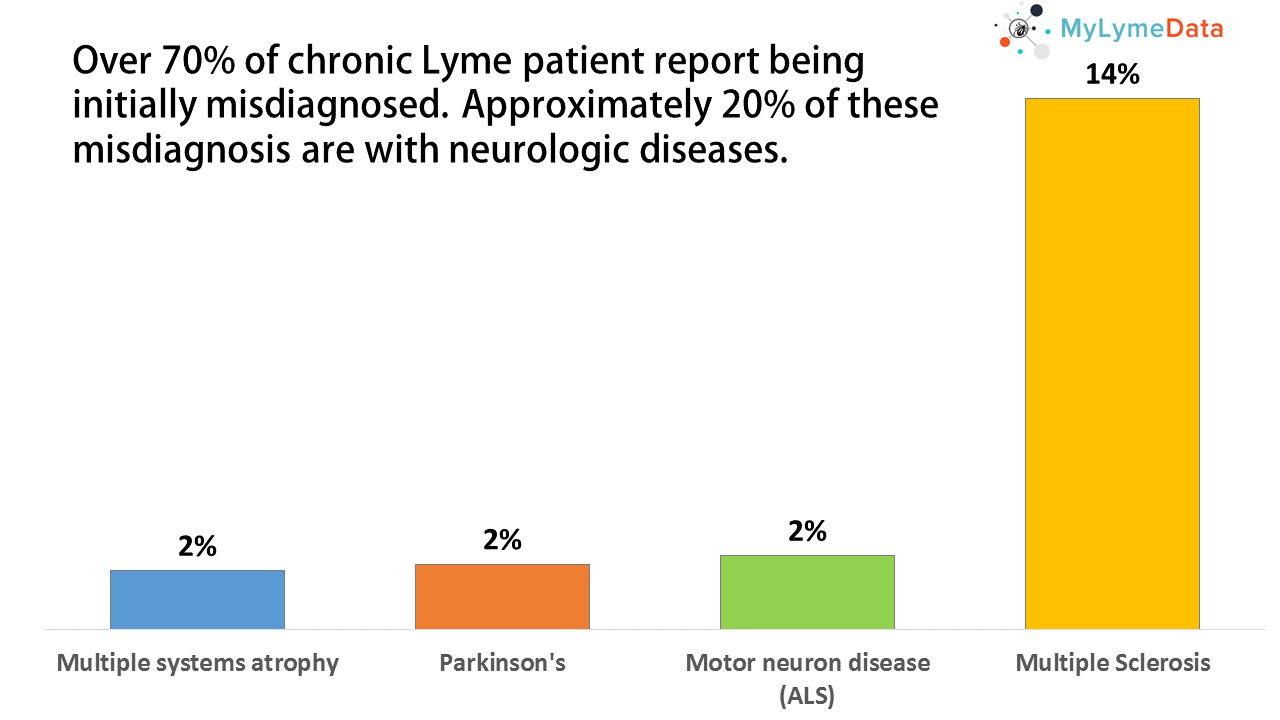
Our MyLymeData registry asks patients if they were initially misdiagnosed with another illness, and if so, what the illness was. About 20% of respondents were told they had a neurological disease. 14% were misdiagnosed with MS, and 2% with other neurological diseases; like ALS, Parkinson’s and multiple system atrophy. When looking at this data, it is important to recognize that geography may play a big role in both the prevalence of neurologic conditions and Lyme disease in a particular area.
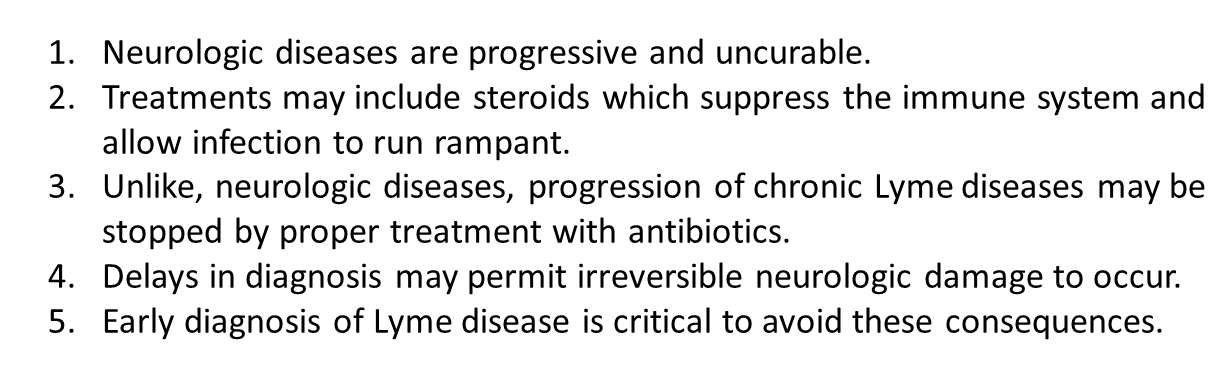
In my previous blog, I pointed out the dangers of misdiagnosis, particularly when patients are given steroids or other immune suppressants that may allow the infection to run rampant. I also pointed out that patients with Lyme disease can become terribly ill on steroids. These are the points to bear in mind:
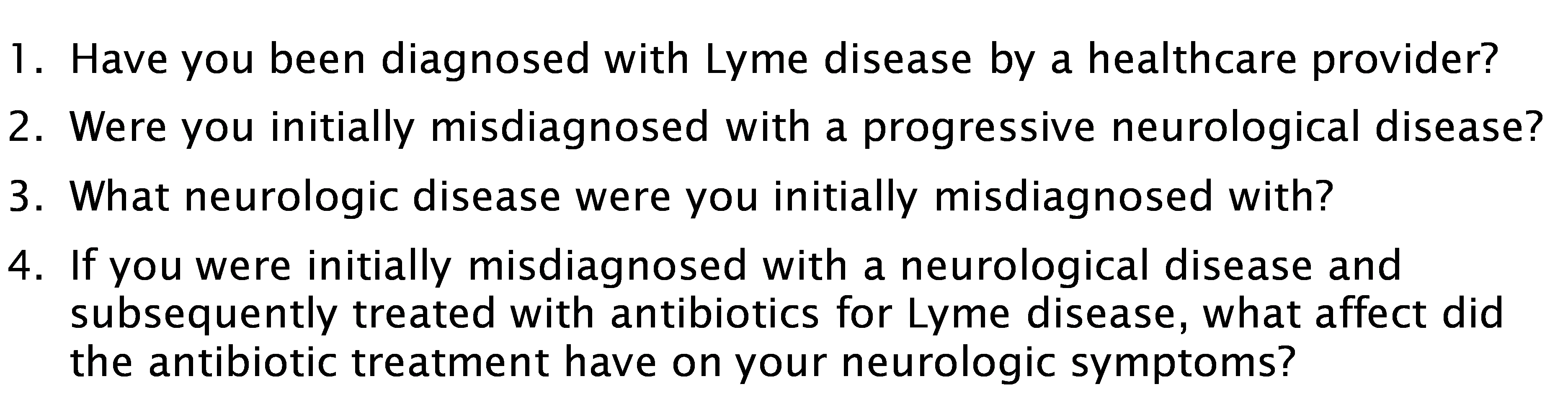
The survey that accompanied my previous blog asked a few questions to readers about their experience with neurologic misdiagnosis. Mainly, we wanted to know if someone previously misdiagnosed with a neurological disease had tried antibiotics and whether these had affected the course of their illness. See the questions we asked below.
 Over 700 people had taken the short survey at the time we analyzed the data. So, did antibiotic treatment have any effect on the people in the survey who were treated with them? 55% reported some improvement. Of these, 37% reported that their symptoms diminished. 9% reported that their neurological symptoms resolved with treatment, and 9% reported that the progression of their illness slowed.
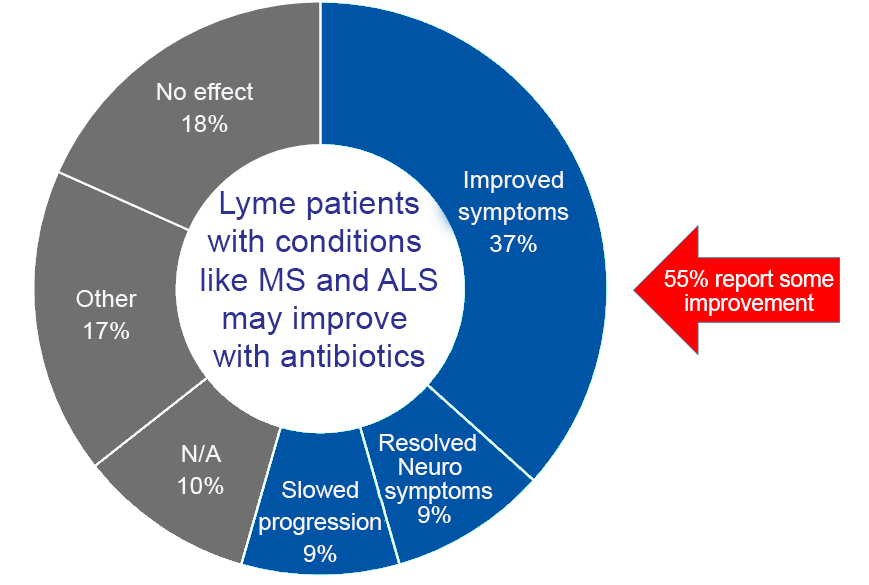
There are some important limitations of the information presented here. First, the sample size was small and it was self-selected. Patients with positive experiences with antibiotics may have been more willing to take this survey. Although 700 had taken the survey, we limited our results to those who had been diagnosed by a healthcare provider with Lyme disease and who had been previously misdiagnosed as having a neurologic disease. The resulting sample was 190 patients. The second important limitation is that survey data cannot demonstrate cause and effect. For that, a more intensive research project using a randomized control trial design would be needed.
Still, the survey data suggests that patients with a neurologic condition who are diagnosed with Lyme disease may improve with antibiotic therapy. This offers hope to some patients with these conditions, especially since treatment approaches for neurologic conditions are not curative. The potential of antibiotics to diminish symptoms, delay progression of illness, or in some cases (9%) to completely resolve neurologic conditions is important news for the community.
We believe that this data shows the potential for MyLymeData to help improve care for patients. If you are not a part of MyLymeData, please enroll today.
The LYME POLICY WONK blog is written by Lorraine Johnson, JD, MBA, who is the Chief Executive Officer of LymeDisease.org. You can contact her at lbjohnson@lymedisease.org. On Twitter, follow her @lymepolicywonk. If you have not signed up for our patient-centered big data project, MyLymeData, please register now.

lymediseasestaff
Do You Have Lyme Disease?
Use our symptom checklist to better understand possible Lyme disease signs and next steps.
Newsletter Sign-up
Helpful Resources
Support LymeDisease.org
Your support helps us advocate for patients and fund critical Lyme disease research.