
Bartonella Symptoms
Need
Need

Bartonella Symptoms: Recognizing This Stealthy Infection
While bartonellosis was once considered to be a mild, short-lived illness, medical professionals now recognize that Bartonella can cause a wide range of health problems. The infection can affect many parts of the body. While some people may not show any signs of infection, others can experience chronic, relapsing symptoms that persist or return over time.
Common Bartonella Symptoms
Bartonella behaves differently from many other pathogens. It hides inside cells, targets blood vessels and the nervous system, and can disrupt immune function. Because of this, people may develop:
These patterns often lead to misdiagnoses such as autoimmune disease, fibromyalgia, or primary mental health disorders.
Bartonella Rash: A Hallmark Sign
A Bartonella rash is one of the most recognizable skin changes linked to Bartonella infections. Because Bartonella can affect the skin in several ways, the rash may look different depending on the species involved and the stage of illness.
Cat Scratch Disease Rash (Bartonella henselae)
In cat scratch disease, caused by Bartonella henselae, the infection often begins with a small red bump or blister at the site of a scratch or bite. This may be followed by tender, swollen lymph nodes near the area and, in some cases, a more widespread rash.
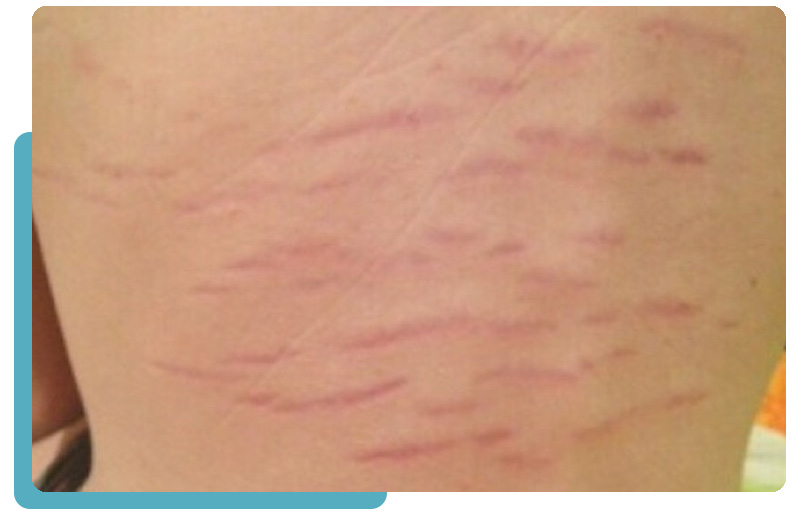
Bartonella Striae (Stretch‐Mark‐Like Rash)
Other forms of bartonellosis can cause streaks, reddish patches, or lesions that resemble stretch marks. These markings—often called Bartonella striae—may appear on the arms, trunk, or legs.
Though they sometimes look like stretch marks, they are actually quite different. One of the biggest clues is where they appear. Stretch marks typically form in areas where the skin has stretched, such as the abdomen, hips, or thighs.
Bartonella rashes, however, often show up in patterns or locations that don’t match those typical stretch‐related areas. This difference in placement—combined with their color, tenderness, and pattern—helps distinguish Bartonella striae from actual stretch marks.
Note: The information presented on this page has been reviewed and approved by a member of our Medical Leadership Board.