NEWS: CDC raises Lyme estimate from 30,000 to 300,000
The CDC has announced a new way of reporting Lyme disease cases in the US. This is a developing story and more information will be forthcoming.
Author | LymeDisease.org
The CDC has announced a new way of reporting Lyme disease cases in the US. This is a developing story and more information will be forthcoming.
The past few months have seen a sharp rise in Lyme disease coverage in the national news media. Here are clickable links, in case you missed them.
In the July 1 issue of The New Yorker, reporter Michael Specter examined “The Lyme Wars.” Shortly after his article was published, NPR’s Terry Gross interviewed Specter on Fresh Air. Despite some accurate reporting, Specter repeated much IDSA standard misinformation as if it were fact, without noting that much of it has been disputed by many scientists. Pamela Cocks, managing editor of The Lyme Times, sent this response to the New Yorker, which chose not to print it. (The only letter the New Yorker published on the subject was from an IDSA-aligned organization.)
Updated edition of “ultimate guide for healthy travel” obscures the fact that Lyme is a world-wide concern.
In this guest blog, pathologist Alan MacDonald describes the struggle to publish the discovery of Borrelia biofilms and what the existence of these biofilms means for chronicity and treatment.
Guest blogger Jennifer Crystal explores what “fatigue” can mean to a person with chronic Lyme disease.
Her case underscores the need for extreme vigilance concerning ticks.
The US Mail brings a gift from the heart to help Lyme patients.
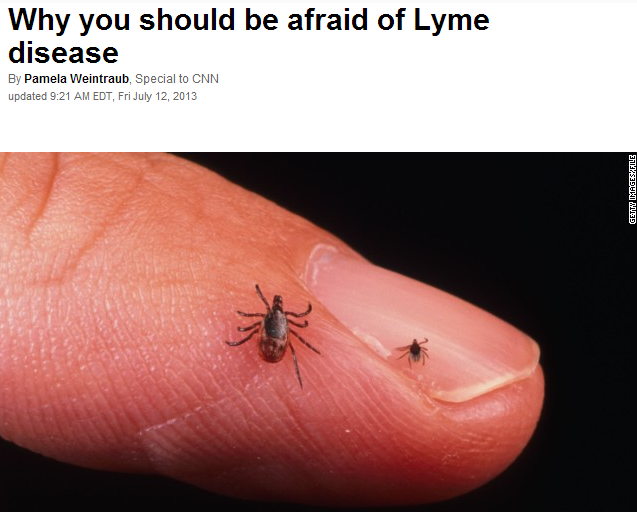
CNN published an editorial by Pam Weintraub that helps set the record straight in Lyme disease. I comment about how the Lyme research agenda has been hi-jacked by an insular group of researchers and why we need to include patients and their physicians as stakeholders in Lyme disease. It’s time for research and treatment guidelines that are accountable and that improve patient care.

The first sign of Lyme disease may be a non-specific ‘flu-like illness with fever, headache, stiff neck and muscle aches and pains several weeks or even months after the nymphal tick season in your area.
End of content
End of content