
TOUCHED BY LYME: (book review) Thalia "growing stronger" after Lyme
Entertainment superstar Thalia talks about having Lyme disease in her recent memoir “Growing Stronger.”

Author | LymeDisease.org

Entertainment superstar Thalia talks about having Lyme disease in her recent memoir “Growing Stronger.”
Ann Corson, MD, one of the speakers at LymeDisease.org’s Jan. 22 Lyme patient conference in San Francisco, knows what the parents of her young Lyme patients go through. Back in 2001, she was working as a family practice physician in Chester County, PA, when her son was bitten by a tick—and their whole world changed.

Since we launched this survey in early October, we have drawn over 4,800 responses. The survey will end on January 1 so I encourage those of you who have not yet responded to take the time to do so. According to the Institute of Medicine, guideline developers must consider patient values and preferences to be considered trustworthy. This survey aims to find out what you think is important about treatment options, choices, risks and benefits. Respond to the survey and remind the IDSA that patient values are central to treatment guidelines!
A holiday poem by Bob Morgenstern
Medical treatment guidelines are tremendously important in determining your treatment options. All important treatment guidelines are listed by the National Guidelines Clearinghouse (NGC), which is part of the US Department of Health and Human Services. It’s the government’s way of providing updated information about different diseases to health care professionals. NGC’s own rules require that listed guidelines be updated every 5 years. The Infectious Diseases Society of America has not revised its controversial Lyme disease guidelines for more than 5 years. Nevertheless, the NGC recently permitted the IDSA to continue listing the Lyme guidelines without updating them.
A CBS news story on Lyme disease has patients concerned about the misinformation that it promotes. On top of that, the story does not have the level of journalistic integrity that serious topics should have. For one thing, there is the title: “Lies and Truths”. Lies are statements that are known to be false that are told to intentionally deceive another person. Lies are not issues that are matters of scientific debate. When a science article title uses the word “Lies”, it tells the reader that it is not about science. Second, the article is a single source article. This means unlike most journalism and particularly good science journalism, there is no attempt to present different sides of the issue. One side, in fact, one person’s opinion is put forth as uncontested “truth” with no counterpoint. Third, the piece is edited by the Orly Avitzur, M.D., M.B.A., Editor-in-Chief of the American Academy of Neurology (AAN). You may recall that the AAN was part of the antitrust investigation by the Connecticut Attorney General into the Lyme guideline development process by the Infectious Diseases Society of America. The reason?

Researchers looking for nymphal ticks at this prominent northern California destination found them in unexpected places, including on and underneath wooden picnic tables and benches.
When Lyme patient/advocate Liz Karkoff, of Tarrytown, NY, recently read that Lyme is one of the “Top 25” most censored news stories of 2011, she decided to do something to change that. She contacted a local reporter, who published a story about her Lyme experience and the difficulties of getting properly diagnosed. She encourages other people in small towns to do the same.
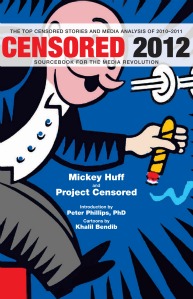
Every year, “Project Censored,” a news-monitoring research program affiliated with Sonoma State University in California, produces a Top-25 list of underreported news stories. These are also included in an annual book, “Censored,” dedicated to news stories that ought to be widely reported but are not.
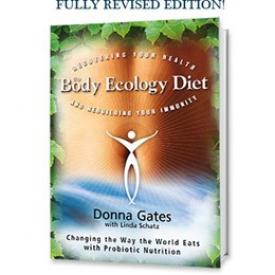
“The Body Ecology Diet: Recovering Your Health and Rebuilding Your Immunity” offers a road map for getting candidiasis under control.
End of content
End of content