
IDSA guidelines panel list as of 2/1/09
Some of you are aware that the original list of 10 panel members is now 9 because Weinstein was removed. For convenience, I am posting the current list of IDSA panel members with Weinstein removed.

Author | LymeDisease.org
Some of you are aware that the original list of 10 panel members is now 9 because Weinstein was removed. For convenience, I am posting the current list of IDSA panel members with Weinstein removed.
Greenwich, CT, January 28, 2009-Patient groups voiced concern and disappointment about the new Infectious Diseases Society of America (IDSA) Lyme disease guidelines’ panel, which excludes physicians who treat patients with chronic Lyme disease. Last May, the Connecticut Attorney General found the IDSA Lyme disease treatment guidelines’ panel had conflicts of interest, engaged in exclusionary conduct, and suppressed scientific evidence. The investigation resulted in a settlement forcing the IDSA to reconstitute a balanced panel free of conflicts of interest under the oversight of an ombudsman to monitor conflicts of interest. No input from patients or treating physicians was permitted in selection.
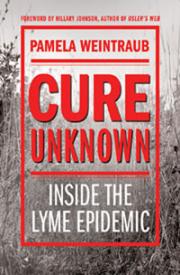
In the chaotic early days of my daughter’s illness, when we trying to make sense of her bizarre symptoms and the equally bizarre reactions we were getting from the medical establishment, I didn’t want to read about the history and controversy surrounding Lyme disease. I just wanted somebody to figure out what was wrong with her and fix it.
Greenwich, CT, January 28, 2009-Patient groups voiced concern and disappointment about the new Infectious Diseases Society of America (IDSA) Lyme disease guidelines’ panel, which excludes physicians who treat patients with chronic Lyme disease. Last May, the Connecticut Attorney General found the IDSA Lyme disease treatment guidelines’ panel had conflicts of interest, engaged in exclusionary conduct, and suppressed scientific evidence. The investigation resulted in a settlement forcing the IDSA to reconstitute a balanced panel free of conflicts of interest under the oversight of an ombudsman to monitor conflicts of interest. No input from patients or treating physicians was permitted in selection.
Greenwich, CT, January 28, 2009-Patient groups voiced concern and disappointment about the new Infectious Diseases Society of America (IDSA) Lyme disease guidelines’ panel, which excludes physicians who treat patients with chronic Lyme disease. Last May, the Connecticut Attorney General found the IDSA Lyme disease treatment guidelines’ panel had conflicts of interest, engaged in exclusionary conduct, and suppressed scientific evidence. The investigation resulted in a settlement forcing the IDSA to reconstitute a balanced panel free of conflicts of interest under the oversight of an ombudsman to monitor conflicts of interest. No input from patients or treating physicians was permitted in selection.

Antitrust law is concerned with constraints of trade that foreclose consumer choice. Guidelines developed by medical specialty societies that have monopoly power (like the IDSA) can become de facto legal standards for the practice of medicine. When they foreclose treatment options and the exercise of clinical judgment, they constrain consumer choice.
Typically, laws are passed in the United States through a democratic process that allows many groups to have a voice in the law before it is passed. Antitrust laws make an exception to guidelines or standards that are developed by groups that have expertise in an area (for instance, computer chips and medicine) so long as they play fair. The reason for this exception is that the level of expertise required in these areas makes it reasonable for "experts" rather than laymen to be setting the rules.
Gooznews posted an interesting commentary on guidelines, conflicts of interest in guideline development and over reliance on expert panels when there are gaps in evidence. Merrill Goozner is a health care ethicist and this is not the first entry on his blog that has caught my attention. You might want to check it out. His post is premised on the recent article by Sniderman in the Journal of the American Medical Association (recent issue), which does a remarkably job outlining the problems with control in evidence based medicine, how "opinions" of the panel members are recharacterized as "science" in the form of evidence based guidelines. Some of the comments to Goozner's post are interesting. One person responds that "Evidence-based medicine has morphed into pharma-based medicine and HMO-based medicine". I thought Goozner's post was a good opportunity to point out some of the problems with the IDSA guidelines. My comment follows:
Arthur Weinstein's role on the IDSA's Lyme guidelines review panel was short lived. Today's list of panel members posted on the IDSA website excludes him. Patient groups were alarmed when he was included in the IDSA's panel list posted by the IDSA on Monday. Weinstein was at NYMC with Dr. Gary Wormser, who was the chair of the 2006 IDSA guidelines panel, which the Connecticut Attorney General investigated and found had been riddled with conflicts of interest , excluded divergent points of view and suppressed scientific evidence. Weinstein was a co-author on the Klempner study, on the safety monitoring board for the vaccines, and involved in the flawed western blot testing (Dearborn Conference). His removal from the panel is a step in the right direction for Lyme patients.

When my family and I needed to quickly come up to speed about Lyme disease several years ago, I looked for a book that would take me by the hand and explain all the complex stuff I needed to know. I never found one at the time. I wish I’d had a copy of The Lyme Disease Solution, by Kenneth Singleton, MD, MPH. (Brown Books, 2008). Dr. Singleton himself suffered from undiagnosed Lyme disease for eight years. Now, having recovered his own health, he works as a Lyme disease specialist in Maryland.
Many people have questions about the IDSA panel, its selection and where we are in the process. This posting I will attempt to answer some of the more common questions.
Several years ago when my daughter first came down with mysterious disabling symptoms that no doctor could diagnose, my neighbor said, “Sounds like it could be Lyme disease.” I knew next to nothing about Lyme, but added it to my list of questions for the doctor.
End of content
End of content