LYMESCI: Ehrlichiosis — The Tick-Borne Disease No One Has Heard Of
According to the experts, ticks and the diseases they carry are expanding into new geographic areas. While the majority of Americans have heard of Lyme disease, fewer than 2% have any knowledge of another tick-borne disease called ehrlichiosis. (1, 2)
As a matter of fact, my own child was CDC positive for an Ehrlichial infection (amongst other things), and when I took her to the Emergency Room for an irregular heartbeat that developed during treatment, the ER doctor told me he had never heard of “Ehrlichia chaffeensis.” True story!
Warning! Ehrlichiosis Infections
In May 2017, an article in the CDC “Emerging Infectious Diseases” Journal, warns that ehrlichiosis infections are being “grossly underreported” in the U.S. with as many as 97-99% of infections going unrecognized. They are projecting that the actual number of annual cases could go as high as 1/2 the number of Lyme disease cases—which would mean we may already have over 150,000 cases of ehrlichiosis annually. (3)
There are several factors causing the underreporting:
- Lack of public education/knowledge—doctors aren’t testing for or diagnosing ehrlichiosis.
- Some cases are mild enough that patients do not seek medical care or a diagnosis.
- Insensitive or inaccurate testing methods may result in false-negative diagnosis.
- Reporting is voluntary and the criteria are restrictive.
Ehrlichosis Tick-Borne Diseases
Ehrlichiosis is the name for several tick-borne diseases that are caused by a group of bacteria known as Ehrlichia. Ehrlichia belong to a larger order of bacterium known as Rickettsiales. (4) (See my previous post on the spotted fever group of Rickettsiae)
Rickettsiae and Ehrlichia belong to a broad group of bacteria that can be spread by a tick bite. These infections can be transmitted alone or at the same time as Lyme disease and are commonly known as co-infections. (I talk more about co-infections here)
The Ehrlichia (E) group includes: (5, 6, 7, 8,)
- chaffeensis: the cause of human monocytic ehrlichiosis (HME)
- ewingii
- muris-like (EML)
Ehrlichiosis Symptoms
While some cases of ehrlichiosis are mild, the disease can be severe or fatal if not treated correctly, even in previously healthy people. Severe symptoms of ehrlichiosis may include difficulty breathing, respiratory failure, bleeding disorders, kidney or heart failure.
Because Ehrlichia infect white blood cells (the cells that fight infection), and mitochondria (the powerhouse of the human cell) the consequences of untreated infection may have long-lasting effects.(9) I often wonder if undiagnosed Ehrlichiosis isn’t responsible for some portion of the millions of people with the mysterious illness known as “Myalgic Encephalomyelitis” or “Chronic Fatigue Syndrome”.
Other symptoms of ehrlichiosis can include:
- Fever/chills and headache (majority of cases)
- Fatigue/malaise (over two-thirds of cases)
- Muscle/joint pain (25% – 50%)
- Nausea, vomiting and/or diarrhea (25% – 50%)
- Cough (25% – 50%)
- Confusion or brain fog (50% of children, less common in adults)
- Lymphadenopathy (47% – 56% of children, less common in adults)
- Red eyes (occasionally)
- Rash (approximately 60% of children and 30% of adults)
Ehrlichiosis Diagnosis and Treatment
Like other tick-borne diseases, diagnostic blood tests will frequently be false-negative during the first weeks of illness. And like other tick-borne diseases, treatment is most effective if started early. For this reason, healthcare providers must use their best clinical judgement and treat patients based upon early symptoms alone.
According to the CDC website: “The diagnosis of ehrlichiosis must be made based on clinical signs and symptoms, and can later be confirmed using specialized confirmatory laboratory tests. Treatment should never be delayed pending the receipt of laboratory test results, or be withheld on the basis of an initial negative laboratory result.”
The CDC goes on to say: “Doxycycline is the first line treatment. for adults and children of all ages and should be initiated immediately whenever ehrlichiosis is suspected.” >(10)
Patients who are treated early may recover quickly on outpatient medication, while those who experience a more severe illness may require intravenous antibiotics, prolonged hospitalization or intensive care.
Ehrlichiosis Transmission
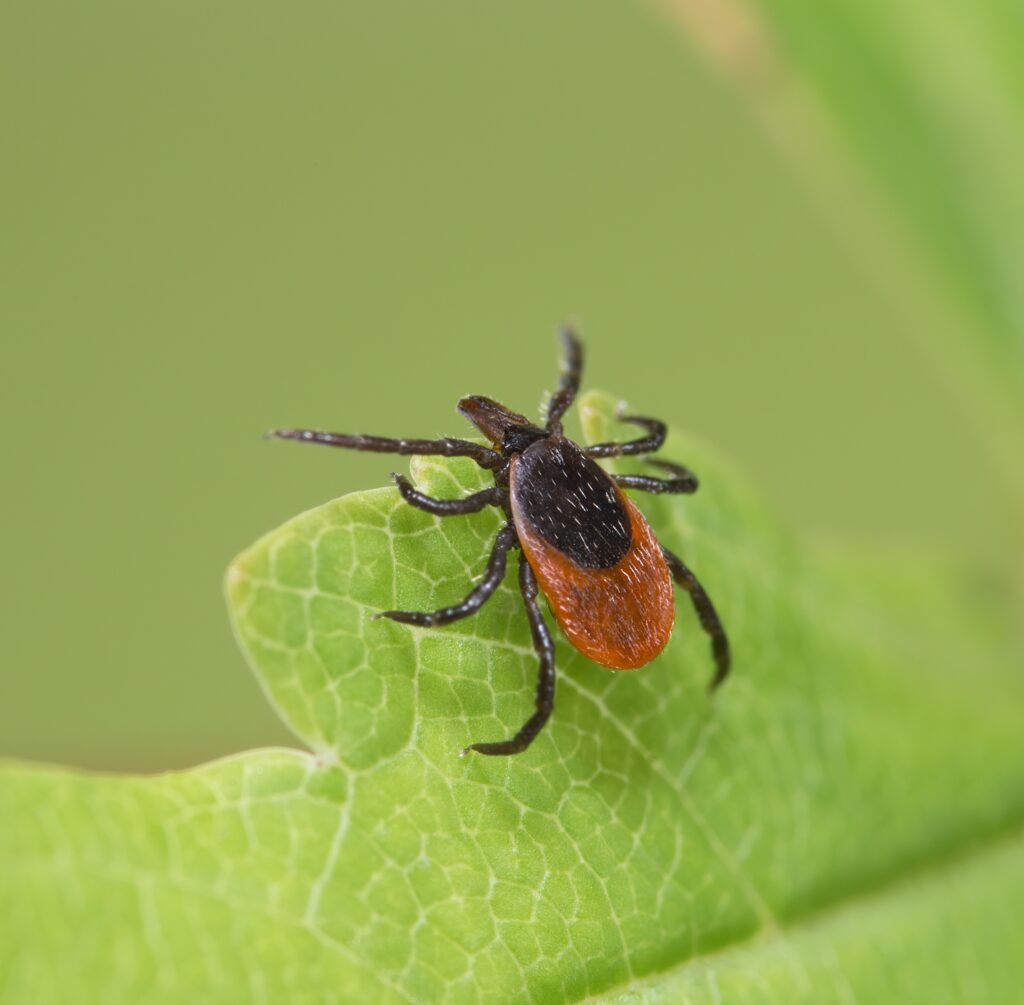
The lone star tick (Amblyomma americanum) is the primary vector of E. chaffeensis (HME), and E ewingii with rates of infection ranging from 0 to 27 percent. In the past decade the lone star tick has expanded into geographic areas where it did not previously occur. This is particularly concerning because the lone star tick is an aggressive biter.
Ehrlichia bacteria have been found in other ticks including the Pacific Coast tick (Ixodes pacificus), Gulf Coast tick (Amblyommma maculatum), American dog tick (Dermacentor veriabillis), and the brown dog tick (Rhipicephalus sanguineus), but there is not a lot of research into how effectively these ticks are able to transmit Ehrlichia to humans. (11, 12)
Preliminary studies suggest that the vector for the newest species E. muris-like (EML) found in Wisconsin and Minnesota is the deer tick (Ixodes scapularis), and in a recent publication, researchers found that 40% of Pacific Coast ticks were carrying three different types of Rickettsia bacteria. (8, 13)
While there is some geographic overlap, in general these ticks are found in the following areas:
- Lone star tick (east of the Rockies)
- Gulf Coast tick (Gulf and Southern states)
- American dog tick (east of the Mississippi)
- Blacklegged or “deer” tick (east of the Rockies)
- Western blacklegged tick (west of the Rockies)
[tweet_dis_img]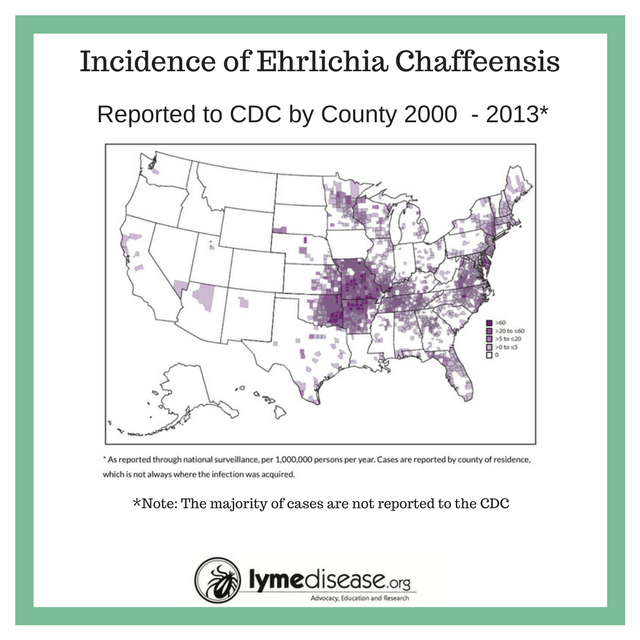 [/tweet_dis_img]
Other modes of transmission
Ehrlichia chaffeensis has been shown to survive for over a week in refrigerated blood. Therefore these bacteria may present a risk for transmission through blood transfusion and organ donation. It has also been suggested that ehrlichiosis can be transmitted from mother to child, and through direct contact with slaughtered deer. (14, 15)
Summary of Ehrlichiosis
[tweet_dis_img]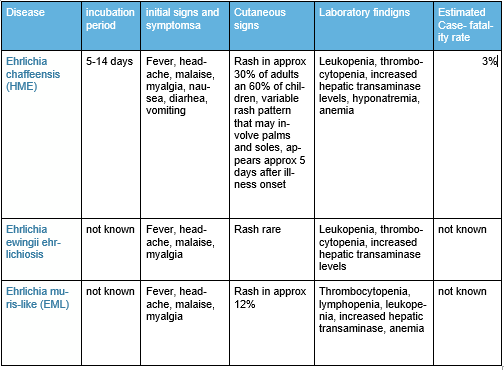 [/tweet_dis_img]
In my next post, I will address another type of rickettsial illness: Anaplasmosis
References:
- CDC | Emerging Tickborne Diseases | Public Health Grand Rounds, March 2017
- U.S. public’s experience with ticks and tick-borne diseases: Results from national HealthStyles surveys
- Relative Risk for Ehrlichiosis and Lyme Disease in an Area Where Vectors for Both Are Sympatric, New Jersey, USA
- CDC MMWR | Diagnosis and Management of Tickborne Rickettsial Diseases: Rocky Mountain Spotted Fever and Other Spotted Fever Group Rickettsioses, Ehrlichioses, and Anaplasmosis — United States, May 2016.
- Human infection with Ehrlichia canis, a leukocytic rickettsia, 1987.
- Ehrlichia chaffeensis: a Prototypical Emerging Pathogen, 2003.
- Tick-borne ehrlichiosis infection in human beings, 2008.
- Emergence of a new pathogenic Ehrlichia species, Wisconsin and Minnesota, 2009.
- Ehrlichia’s molecular tricks to manipulate their host cells, 2015.
- CDC: Ehlichiosis
- Natural history of Ehrlichia chaffeensis: vertebrate hosts and tick vectors from the United States and evidence for endemic transmission in other countries, 2010.
- Survey of Ixodes pacificus Ticks in California Reveals a Diversity of Microorganisms and a Novel and Widespread Anaplasmataceae Species
- Species composition and temporal distribution of adult ixodid ticks and prevalence of Borrelia burgdorferi sensu lato and Rickettsia species in Orange County, California
- Perinatal Transmission of the Agent of Human Granulocytic Ehrlichiosis
15. Exposure to deer blood may be a cause of human granulocytic ehrlichiosis

lymediseasestaff
Do You Have Lyme Disease?
Use our symptom checklist to better understand possible Lyme disease signs and next steps.
Newsletter Sign-up
Helpful Resources
Support LymeDisease.org
Your support helps us advocate for patients and fund critical Lyme disease research.