
TOUCHED BY LYME: Who gets the Lyme research funding, anyway?
The 2011 CALDA Lymewalks are raising money for scientific research into Lyme and tick-borne diseases. Here's where the money goes.

This blog has several goals. First, to explore the personal side of Lyme disease and how it affects individuals and families. Second, to highlight useful information for people seeking answers about this complicated illness. Third, to help foster a sense of unity and shared purpose among the many diverse members of the Lyme community. Dorothy, who serves as President of LymeDisease.org, has a family member with Lyme disease. She is co-author of a book called When Your Child Has Lyme Disease: A Parent’s Survival Guide.
The 2011 CALDA Lymewalks are raising money for scientific research into Lyme and tick-borne diseases. Here's where the money goes.

Long-term intravenous antibiotic treatment for Lyme disease is very expensive and often not covered by health insurance. One Wyoming couple found it pays to shop around.
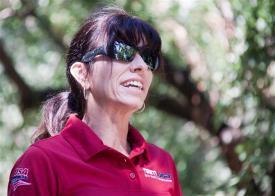
Pamela O’Kane’s remarkable Lyme story took a challenging turn after last year’s Lymewalk.

Guest blogger & Lyme advocate Barbara Arnold, an attorney who practices disability law in Berkeley, CA, explains some of the factors involved when a Lyme patient files for SSDI.

President Barack Obama is holding a Twitter Town Hall on Wednesday, July 6, at 2 pm eastern time.

Writing a succinct letter to your local newspaper can be a good way to get started with Lyme activism. Here are a few other suggestions.
When you and/or members of your family are chronically ill, there may be friends and family members willing to help out. But responding to and coordinating such offers of help can seem too overwhelming. Here's a way to make the process work more smoothly.

Toni Bernard, JD, the author of the award-winning book, “How to Be Sick: A Buddhist-Inspired Guide for the Chronically Ill and their Caregivers,” blogs about something that is difficult for many Lyme patients–asking others for help when you need it.

I often tell new Lyme patients that two of the most important tools for fighting this disease are a three-ring binder and a hole punch. By this I mean it’s essential to keep good records. Get copies of everything—lab tests, medical procedure reports—and stick them in your binder, keeping this important information easily accessible. Now, somebody has come along to improve on this idea considerably.
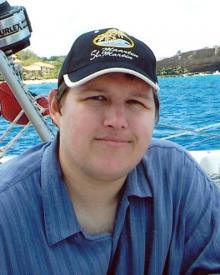
As a kid growing up in southern California in the 80s and 90s, Bryan Bower was a bit of a daredevil: BMX biking, rollerblading, skateboarding, snowboarding—never a show-off, but always pursuing his jumps and thrills. As a college student, he discovered a new passion, rock climbing. He went everywhere with his new best friend and climbing buddy Rhyan. Joshua Tree, Tahquitz, The Needles and Malibu Canyon were southern California favorites. In his early 20s, Bryan started training to climb Yosemite's El Capitan, practicing with one of those folding ledges that you haul up and sleep on when you’re half way up the 3,000-foot granite face. All that came to a screeching halt about six years ago
End of content
End of content